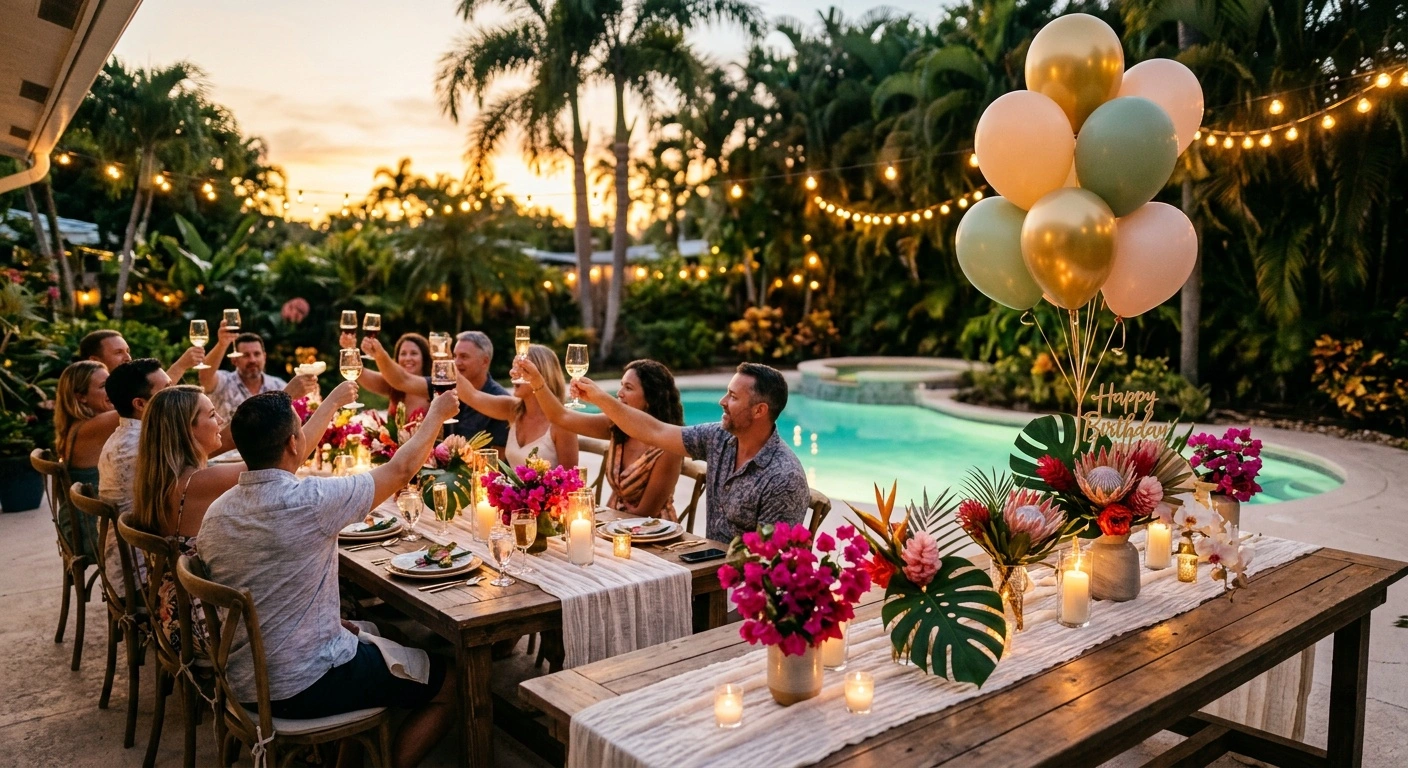
The best birthday dinner party ideas start with the guest of honor, not the decorations. Decide how they want to spend the evening. They might prefer a long meal, a live cooking show, cocktails, or a casual backyard supper.
Next, settle the date, location, budget, guest list, dinner format, and weather backup before buying decorations. Make sure you have enough seating and a menu that will not trap the host in the kitchen. You also need a clear plan for dietary needs and one intentional moment for a toast or tribute.
Choose the format according to the group. A seated dinner suits an intimate milestone, while family-style service keeps a backyard party relaxed. Food stations work well when guests arrive at different times. For a Florida celebration, include shade, water, fans, and an indoor lightning plan from the start.
Birthday Dinner Party Ideas for Real Groups
A beautiful table cannot rescue a dinner format that does not suit the guest count. Before choosing the menu, consider how well the guests know one another. Also account for older relatives who need comfortable seating and guests who may bring children.
For about 10 guests, one table with plated or family-style service can feel intimate without becoming formal. At around 20 guests, buffet service, food stations, or live cooking can improve movement and reduce last-minute plating. A group of 40 needs a deliberate layout, several food and drink stations, enough restrooms, and assigned help or professional service.
1. A Seated Milestone Dinner
A seated dinner suits a 40th, 50th, retirement birthday, or another significant celebration. It works especially well when the guest list includes close friends and relatives from different parts of the celebrant’s life.
Keep table decorations low enough for conversation. Assign seats if many guests have not met, and place the birthday person where they can see the room. Avoid isolating them at the end of a long table.
Choose a menu that you can prepare mostly before guests arrive. A composed salad, braised or roasted main course, two substantial sides, and a birthday dessert form a manageable meal. Do not plan several dishes that need individual finishing unless someone else will run the kitchen.
Serve appetizers for 30 to 45 minutes, then begin dinner while everyone still feels hungry. Schedule the main toast before dessert. One thoughtful speech with a few short additions usually works better than an open microphone.
State the dress code and fixed arrival time clearly on the invitation when the dinner requires them.
2. A Family-Style Backyard Supper
Long tables, large serving bowls, and shared dishes create a generous backyard dinner without making it stiff. This format works particularly well for groups of about 10 to 20. Guests can settle into conversation while sharing one meal.
Build the menu around forgiving foods. Options include roasted chicken, sliced steak, grilled vegetables, sturdy salads, bread, and baked pasta or grain dishes. Place duplicate bowls at both ends of a long table so guests can reach each dish easily.
For a Florida backyard, begin near sunset when possible. Provide shade, fans, chilled water, and mosquito control. String lights can mark paths and dining areas, but food and drink stations need brighter task lighting.
Keep the serving table away from the pool edge and grill traffic. It should also sit clear of any area where guests will line up for the restroom.
3. An At-Home Hibachi Birthday Dinner
The grill heats up, the spatulas start clicking, and guests turn toward the first flame. An at-home hibachi dinner combines a full meal with live entertainment. It also keeps the host from cooking throughout the evening.
A private hibachi chef generally brings a portable flat-top grill and sets it up in an approved outdoor space. The chef may cook chicken, steak, or shrimp with rice and vegetables. Familiar tricks can include an onion volcano and tossed bites.
The chef also handles cleanup around the cooking area. Because guests face the grill, confirm the final headcount before arranging chairs and tables. Give everyone a clear view.
Hibachi cooking uses an open flame, so it requires an open, flat outdoor area. Do not plan it inside, in a garage, on a condominium balcony, or anywhere the property prohibits grills. Confirm setup requirements when booking and review all HOA, condominium, rental-home, or venue rules.
Discuss allergies well before the event. Hibachi often involves shared grill surfaces and ingredients such as soy sauce, sesame, butter, egg, and shellfish. A chef may explain ingredients or adjust parts of the service, but shared equipment cannot guarantee an allergen-free meal.
Florida hibachi parties also need a plan for lightning, not just rain. If thunder or lightning occurs, everyone must enter a substantial enclosed building, including the cook. An open pavilion, tent, or patio does not provide safe lightning shelter.
Hibachi OMG provides this type of outdoor birthday dinner in South Florida and the Orlando area. Service details and quotes vary by event.
4. A Build-Your-Own Dinner Bar
A taco, baked-potato, pasta, grain-bowl, or slider bar helps accommodate mixed preferences. It also keeps the meal casual. This format scales more easily than plated service because each additional guest creates less last-minute kitchen work.
Offer one or two proteins, a substantial vegetarian choice, two bases, and a focused set of toppings. Avoid crowding the table with twenty small bowls. Arrange everything in order: plates, bases, proteins, toppings, sauces, and napkins.
Label dishes clearly for vegetarian, vegan, or gluten-free guests. However, labels do not prevent cross-contact through shared spoons or preparation surfaces. Discuss serious allergies directly with each affected guest rather than assuming a self-serve station will meet their needs.
Set out small batches and replenish them during dinner. This approach keeps food from sitting on the table longer than necessary.
5. Cocktails, Mocktails, and Small Plates
A small-plates dinner encourages guests to move around and talk. It works well for friends who prefer mingling over a three-course meal. The menu can include passed bites, flatbreads, skewers, substantial salads, sliders, dumplings, and a later dessert table.
Serve enough food to count as dinner. Guests should not have to build a meal from three olives and a miniature tart. Provide seats for everyone who needs one, even without assigned places.
Keep the bar focused with wine, beer, one batch cocktail, and a thoughtful zero-proof drink. Sparkling citrus tea, fruit-and-herb spritzes, and ginger-lime coolers all feel festive. Place water where guests can serve themselves.
Offer food throughout alcohol service and use measured pours. Help guests arrange safe transportation home when needed.
6. A Decade Dinner Without Costume Pressure
A decade theme works best through music, colors, and a few recognizable food references. It does not need to require costumes. Choose an era that matters to the birthday person, such as their college years or the period of their favorite music.
Build a playlist that starts with background tracks during dinner. Shift to livelier songs afterward. Use two or three design cues, such as metallic accents, geometric linens, or vintage-style glassware.
Keep the table free of clutter and decorations with readable commercial logos. The menu can reference the period without recreating every dated party dish.
Ask guests to submit one song or memory with their RSVP. Use a few of those stories during the toast to help different groups connect. If dressing up remains optional, write “festive decade-inspired attire welcome” on the invitation.
7. A Tropical Patio Dinner
A tropical dinner suits Miami, Fort Lauderdale, Boca Raton, West Palm Beach, and Orlando. It works especially well at a pool home or in a garden with palms. Let the setting carry most of the design.
Use greenery, simple linens, wind-protected candles, and colorful fruit or flowers. Serve grilled proteins, citrusy salads, rice, roasted vegetables, and a fruit-forward dessert. Offer sauces separately when possible.
A pineapple-mint cooler or passion-fruit spritz can include alcohol or remain zero-proof. Give both versions the same attention.
Tropical weather still requires a backup plan. Afternoon and early-evening thunderstorms occur often during warmer months, and hurricane season runs from June through November. Decide in advance when the party will move indoors.
Make sure the backup room holds every guest. Protect speakers and electrical connections from rain.
8. Dinner Followed by a Dessert Lounge
Some guests care most about cake, coffee, and conversation after dinner. In that case, serve a streamlined buffet or family-style meal. Then reset one area as a dessert lounge with cake, small sweets, coffee, tea, and a festive zero-proof drink.
Plan about one slice of cake, one cupcake, or one doughnut per guest as a starting point. For cookies or bars, allow one to two pieces per person. Adjust for serving size and the number of other desserts.
A dessert-focused second act works well when some guests can only arrive later. Make the timing clear so no one expects dinner after you have cleared it. If the event includes only dessert and drinks, state that on the invitation.
Add comfortable seating and lower the music volume. The birthday person should have room to circulate and talk.
Choose the Dinner Format Before Building the Menu
The dinner format determines how much seating, serving equipment, refrigeration, and help you need. A plated meal requires coordinated timing. Family-style service needs table space for shared dishes and heat-safe trivets.
A buffet needs a logical line, serving utensils, hot and cold holding equipment, and space for guests carrying full plates. Live cooking requires a safe work zone and seating arranged around the performance. Once you set the format, you can edit the menu more easily.
As a broad purchasing estimate, plan roughly 1 to 1.5 pounds of total food per person. Adjust for the menu’s richness, event length, service style, and expected appetites. Treat this figure as a planning estimate, not a nutrition recommendation or guarantee.
| Menu category | General starting estimate | What may change it |
|---|---|---|
| Appetizers before dinner | 4 to 7 bite-size pieces per person | Increase the amount for a long appetizer period. This quantity will not cover an appetizer-only dinner. |
| Main protein | 6 to 8 ounces per person | Bone-in cuts, cooking loss, buffet service, and popular proteins may require more purchased weight. |
| Substantial sides | 4 to 6 ounces per person for each major side | Distribute the total quantity across the menu when serving several sides. |
| Cake or individual dessert | 1 serving per person | Cake yield changes significantly with slice size. |
| Cookies or bars | 1 to 2 per person | Adjust for piece size and the number of other desserts. |
For a dinner with confirmed RSVPs, plan for everyone who accepted. Keep a small buffer for an unexpected guest, a dropped platter, or larger appetites. Reduce waste by choosing foods that store or freeze well.
You can also hold some portions in reserve instead of displaying the whole meal at once.
Plan for Allergies Before Choosing the Caterer
Ask about allergies and serious dietary restrictions on the RSVP form. Do not wait until dinner service. Federal law recognizes nine major allergens: milk, eggs, fish, crustacean shellfish, tree nuts, peanuts, wheat, soybeans, and sesame.
Shared grills, cutting boards, fryers, serving utensils, and poorly cleaned equipment can cause cross-contact. Keep packaged-food labels and recipes available until the party ends. That way, you can check ingredients if a guest raises a question.
Use separate utensils where needed and label dishes clearly. Do not call food allergen-free unless its ingredients and preparation support that claim. Bakery cases, bulk displays, and other unpackaged sources may provide less ingredient information than packaged foods.
Vegetarian, vegan, gluten-free, religious, and preference-based requests do not always involve allergies. Still, identifying them early prevents awkward improvising during dinner.
Send Invitations That Answer Practical Questions
An adult birthday invitation should name the celebrant and list the date, start time, location, RSVP method, and deadline. Include the dress code or theme and explain whether the event is a surprise. An end time helps guests plan transportation, childcare, and work schedules.
Send formal dinner invitations roughly three to six weeks ahead. You can send informal dinner invitations up to about three weeks in advance. Use the earlier part of that range for larger groups, milestone birthdays, holiday weekends, and events with outside food service.
Some catered orders may require several weeks of lead time.
Address invitations to the people you intend to host. Do not make guests interpret vague adults-only or plus-one policies. State whether dinner will take place outdoors and include parking, gate, elevator, or access instructions.
If guests must pay for their own restaurant meals, disclose that before they commit. Do not present the event as a hosted dinner. You can also write “No gifts, please” when that matches the celebrant’s wishes.
Set the RSVP deadline early enough to finalize seating, rentals, dietary arrangements, food quantities, and outside services.
Give the Birthday a Beginning, Middle, and Main Moment
A dinner party needs a simple progression. Otherwise, the evening can feel like guests arrived, ate, and wandered away. Allow about 30 to 45 minutes for arrivals and appetizers, then begin the main meal before hunger changes the mood.
Schedule the toast while everyone has food or a drink but before guests begin leaving. Tell speakers in advance and suggest a short time limit. This matters most when several friends or relatives want to speak.
After the toast, bring out the cake or show a slideshow. You might also play a favorite song or organize a group activity connected to the celebrant. Keep adult games optional because forced participation can stall an otherwise relaxed evening.
Live cooking, a thoughtful playlist, a photo display, or printed memory prompts may provide all the entertainment you need.
Handle Surprise-Party Logistics Like a Small Operation
Assign one person to manage the guest of honor and another to manage the party location. The first person handles the cover story, timing, transportation, and delays. The second person tracks guest arrivals, parked cars, lighting, and the signal to get quiet.
Tell guests exactly when to arrive and where to park. Move party communication to a group thread that excludes the celebrant. Ask everyone to avoid posting photos, tagging the location, or contacting the birthday person about the supposed plans.
Add a timing buffer because surprise arrivals rarely happen at the exact planned minute. If the celebrant dislikes sudden reveals, use a gentler approach. Let a few familiar people greet them first, then lead them into dinner.
Most importantly, confirm that the guest of honor enjoys surprises before organizing one.
Build Three Plans for a Florida Outdoor Birthday
A Florida birthday dinner needs three separate plans. Prepare for hospitality, weather and lightning, and property permission. First, confirm that the home, condominium, HOA, rental, park, beach, or private venue allows your guest count and planned activities.
Common restrictions may cover parking, event hours, amplified sound, alcohol, vendors, pool use, decorations, and open-flame cooking. They may also affect common-area reservations. Obtain written approval where possible instead of relying on an informal comment from an owner, neighbor, guard, or concierge.
Public parks and beaches may require separate permits for events, grills, alcohol, sound, tents, or commercial services. Check with the city or county that controls the specific property. A vacation rental’s sleeping capacity does not automatically set its daytime visitor limit.
Review the rental agreement, house rules, owner permission, local occupancy rules, parking limits, and association requirements.
For summer events, schedule toward evening and provide shade, water, and fans. Assign one person to monitor the weather. If anyone can hear thunder, move the full group into a substantial enclosed building or hard-topped enclosed vehicle.
Wait at least 30 minutes after the last thunder before restarting outdoor activities. A tent or open patio can block sun or light rain, but it cannot provide safe lightning shelter. The indoor backup space must hold everyone, not just the cake table.
For live outdoor cooking, confirm what will happen if conditions prevent the chef from setting up or continuing safely.
Keep the Buffet Safe in Florida Heat
Do not leave perishable food out for more than two hours. When the outdoor temperature rises above 90°F, limit that time to one hour. Keep cold food at 40°F or colder and hot food at 140°F or warmer.
Use a food thermometer instead of judging temperature by touch.
Nest cold dishes in ice. Keep backup platters refrigerated or inside properly packed coolers. Use several inches of ice, blocks, or frozen gel packs, and place coolers in the shade.
Consider a separate drink cooler so guests do not open the food cooler repeatedly.
Use small serving platters and replace them with fresh ones. Do not add new food to a partly used dish. Confirm that warming equipment can maintain at least 140°F because some consumer appliances cannot hold food safely.
Label the time each platter goes onto the buffet, or assign one person to monitor service. Discard food that exceeds the applicable one-hour or two-hour limit, even if it looks and smells normal. Reheat leftovers to 165°F and never taste questionable food to test its safety.
Do Not Forget the Equipment List
Many day-of problems involve equipment rather than food. Count tables, chairs, linens, plates, glasses, flatware, serving pieces, and serving utensils. Also check trash containers, coolers, ice, warming equipment, lighting, extension needs, and speakers.
Use extension cords and electrical equipment that suit the location. Protect all electrical connections from weather. Set up a separate drink station so guests do not cross the dinner line whenever they need water.
Place visible trash and recycling bins away from the food. Stock the restroom with extra paper products, soap, hand towels, and a lined wastebasket. Finally, walk the guest route after dark.
Add lighting around steps, gates, pool edges, and uneven pavers.
Let the Celebrant Enjoy the Dinner
The right format gives the guest of honor time to eat, talk, laugh, and hear what people came to say. Choose one strong concept and build dietary needs into the plan. Skip activities that create work without improving the evening.
The most useful birthday dinner party ideas account for permissions, weather, seating, and food safety before decorations. That applies to a formal table for 10, a self-serve feast for 20, or an outdoor hibachi show. Once the practical details are settled, hand off a few jobs and schedule the toast.
Then be present when the candles come out.


