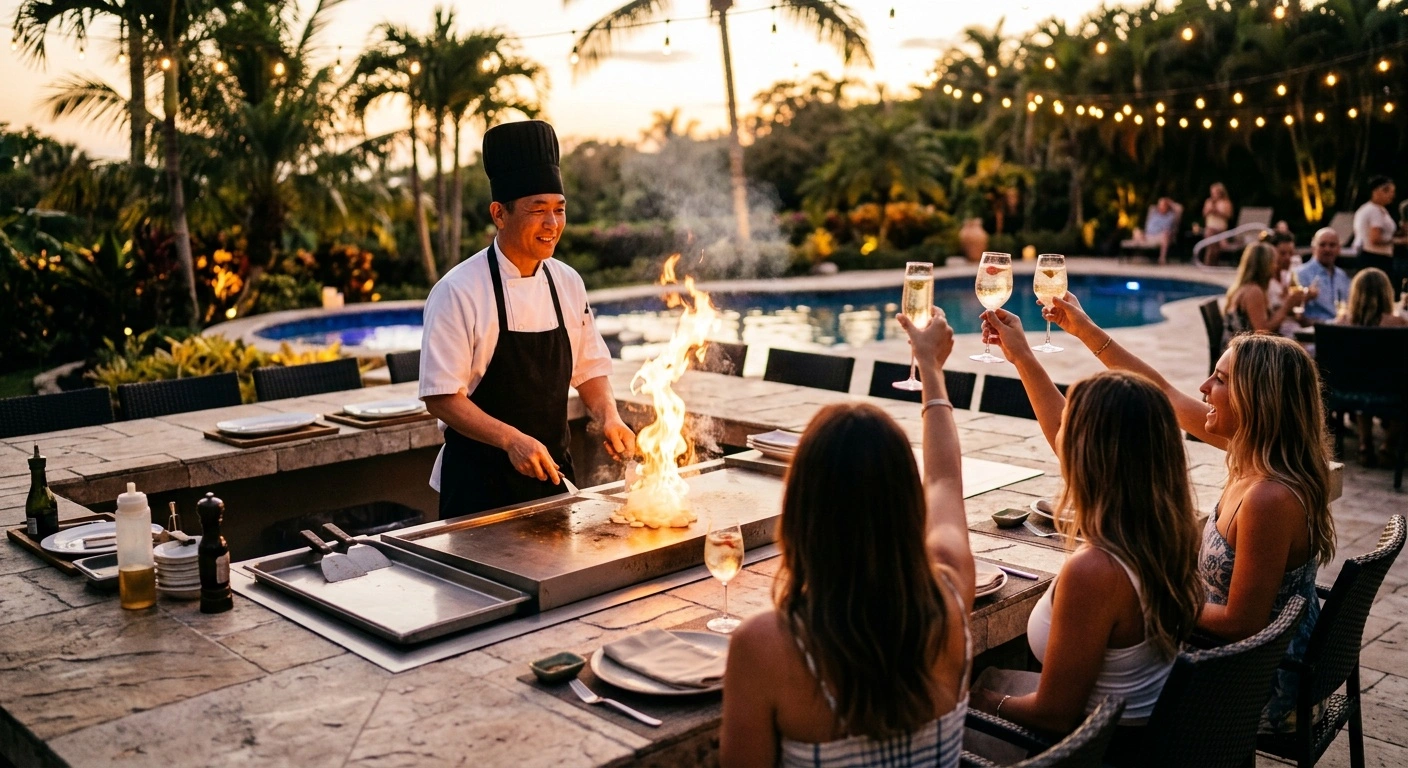
A girls night hibachi party gets lively when the grill heats up and a spatula clicks against steel. Friends pull their chairs closer, and phones come out for the onion volcano. Dinner becomes the entertainment.
Instead of disappearing into the kitchen, the host can sit down and enjoy the show. The chef works through flames, tossed shrimp, and quick spatula tricks. A private hibachi chef generally brings a portable flat-top grill, cooks in an approved outdoor area, and clears the cooking setup afterward. Exact inclusions vary, so confirm what the host must provide before booking.
This format works well for birthdays, Galentine’s gatherings, bachelorette weekends, reunions, and overdue catch-ups. Everyone shares one experience instead of breaking into small conversations around the house. The evening also gains a natural structure: welcome drinks, the cooking show, dinner, dessert, and photos. Early planning keeps those moving parts under control.
Why a Girls Night Hibachi Party Works
Hibachi solves two common hosting problems. It feeds the group while giving everyone something fun to watch. Guests gather around the grill instead of waiting for the host to finish cooking. The chef’s performance also creates easy conversation among friends who may not know one another.
The flames and onion volcano provide the spectacle. Tossed shrimp and guest participation keep the table involved. The meal also has a clear starting point, which helps prevent cocktails from turning into a very late dinner.
Once guests sit down, the chef controls the cooking pace and serves each item from the grill. The host avoids preparing a multipart meal or turning the kitchen into a cleanup zone. The experience feels more personal than a buffet and more relaxed than managing a large restaurant reservation.
Start With the Guest Count, Not the Decorations
Confirm the guest count before ordering balloons, choosing drinks, or placing the grill. Each guest needs a stable chair, a place setting, and a clear view of the cooking area. The chef also needs room to work without blocking the route to the bar, restroom, or house.
A smaller group can often share one continuous seating arrangement. A larger gathering may need more tables, a longer service window, or a different setup from the provider. No single hibachi layout works for every property. Share the final headcount and photos or measurements of the outdoor space when requesting a quote.
Choose the guest list to match the occasion. That might mean eight close friends for a birthday or a broader group for a bachelorette weekend. If some guests have not met, make introductions and avoid seating established friends in closed clusters. You do not need forced bonding exercises, but no guest should feel like an extra.
Send an Invitation That Covers the Details
Include the date, address, start and end times, occasion, RSVP deadline, and attire. Also explain that the chef will cook dinner outdoors. Send invitations early when hiring a chef, planning a holiday weekend, or coordinating out-of-town visitors. Four to six weeks provides a useful window for a holiday party, while an informal dinner may need less notice.
Ask about food allergies and dietary restrictions on the RSVP. Clarify whether the invitation includes plus-ones and whether guests should bring anything. You should also state whether the host will cover the evening.
If friends will share costs, disclose the expected contribution in the original invitation. Include any cancellation or refund arrangement as well. Do not request money after the event without discussing it first. Ask everyone to arrive promptly because late guests may miss part of the cooking performance or dinner.
Set a Photo Policy Before Phones Come Out
A hibachi show naturally produces plenty of photos and videos. However, not every guest wants to appear in a public post. Use the invitation or group chat to explain your sharing policy. Guests might share freely, keep images within the group, or ask permission before posting.
This step helps work friends, milestone birthday groups, and bachelorette parties whose guests do not know one another well. Designate one person to record the main grill moment. That prevents a row of phones from blocking the chef or crowding the hot cooking zone.
Take posed group photos before dinner while everyone is fresh and the light remains flattering. Then let the cooking performance hold the group’s attention. No one wants to watch the onion volcano through another person’s screen.
Choose a Legal, Safe Outdoor Setup
A portable hibachi grill uses an open flame and requires an open, flat outdoor area. Do not assume the chef can cook indoors, in a garage, on a condo balcony, or under a covered patio. Confirm the provider’s setup and clearance requirements before booking. This matters especially when the yard is compact or the only surface is a wooden deck.
Keep at least a three-foot safety zone around hot cooking equipment. Allow more clearance if the chef, property rules, or local requirements call for it. Keep guests, pets, handbags, decorations, combustible materials, and drinks outside that zone.
Place the grill away from siding, deck rails, eaves, and overhanging branches. The chef should not work along the main route between the seating area, bar, restroom, and house.
Check HOA, Condo, Rental, Park, and Beach Rules
Confirm property permission before paying a deposit. Condos and HOAs may regulate grills, propane, guest counts, parking, vendor access, noise, cleanup, and event hours. They may also require written approval for a pool deck, terrace, clubhouse lawn, or another shared space.
At an Orlando-area vacation rental, request written permission from the owner or manager. Do this before inviting extra visitors or bringing in a chef and cooking equipment. Review the property’s occupancy, party, parking, quiet-hour, visitor, open-flame, and commercial-service terms. State rental licensing does not automatically authorize events.
Public parks and beaches may require reservations, permits, insurance, or separate approvals. Rules may cover grills, alcohol, amplified sound, tents, and outside vendors. Contact the city or county responsible for the exact property and request a written answer.
Arrange the Party in Clear Zones
A practical layout keeps guests near the action without creating a crowded knot around the grill. Start with the dining area. Place welcome drinks and appetizers far enough away to keep early arrivals out of the cooking zone.
Use another surface for desserts and favors. This keeps them away from raw ingredients, serving utensils, and hot food. Place a visible trash container near the drink station and another near the dining area, but keep both away from food.
Make the restroom path obvious and well lit. Pay extra attention if guests must cross a pool deck or move between different surfaces. Keep chairs, cords, coolers, and decorative lanterns out of walkways.
Before guests arrive, walk each route while carrying a plate and drink. Fix anything that feels awkward. A minor obstruction becomes a larger problem after the party fills up.
Plan Seating for Comfort, Visibility, and Heat
Set stable chairs on level ground. Leave enough room for guests to stand without brushing the grill or squeezing behind the chef. Seat anyone with mobility concerns along an easy route with minimal steps and convenient restroom access.
Provide more distance for guests who are pregnant, heat-sensitive, or uncomfortable near the grill. They should still have a clear view. In warm weather, arrange shade for the period before cooking begins. Use outdoor-rated fans only where they can operate safely away from flames and loose decorations.
Offer water as soon as guests arrive. Use low flowers, greenery, or battery-operated candles so decorations do not hide the spatula work. Keep real candles far from the cooking area and anything that could blow toward the flame.
Build a Hibachi Menu for the Whole Table
Keep the main meal focused instead of offering a long catalog of choices. Common protein categories include chicken, steak, shrimp, fish, and similar options. However, each provider sets its own selections and preparation details. Two or three protein choices are often easier to coordinate than a different meal for every guest.
Pair those proteins with the provider’s available rice, noodles, vegetables, sauces, and accompaniments. Confirm each inclusion instead of assuming that restaurant-style extras come with at-home service.
Keep pre-dinner snacks light because the cooking show and meal should remain the focus. A crisp vegetable platter, fruit, or a modest cheese board can welcome guests without spoiling dinner.
Use These Food Quantities as Starting Estimates
These quantities are general purchasing estimates, not hibachi-specific requirements. Appetite, menu variety, event length, and provider portions will affect the final amount. Ask the chef or catering service to confirm quantities before buying supplemental food.
| Menu item | General rule of thumb | Planning note |
|---|---|---|
| Appetizers before dinner | About 6 small bites per guest | Use less when dinner begins soon after arrival |
| Total meat or seafood | About 6–8 ounces per adult | Divide the total among the selected proteins |
| Total dinner food | About 1 pound per adult | Includes protein, starches, vegetables, and other components |
| Small desserts | About 2 pieces per guest | Mini portions make it easier to offer two flavors |
| Cake or another portioned dessert | About 4 ounces per guest | Adjust the amount when serving additional sweets |
Keep a modest backup amount for an incorrect RSVP, dropped portion, or last-minute dietary need. Do not place every appetizer or dessert outside at once. Instead, refill small platters so food stays fresher and you can track its time outdoors. Florida heat can shorten the safe serving window.
Discuss Allergies Before Finalizing the Menu
Hibachi commonly uses shared grill surfaces. Recipes may include soy sauce, sesame, butter, egg, wheat, and shellfish. Tell the chef about every allergy and dietary restriction before the event. Do not wait until the guest sits down.
Ask direct questions about sauces, oils, marinades, utensils, preparation areas, and cross-contact procedures. Removing one ingredient from a plate does not make a meal allergen-free when the chef uses shared equipment.
A guest with a serious allergy may need an alternative meal that the provider approves in advance. Keep communication direct among the guest, host, and chef. Do not guess about what “should be fine.” Confirm vegetarian and other dietary requests at the same time so the chef can plan portions and cooking order.
Serve Drinks That Complement Dinner
Offer one or two simple signature drinks instead of stocking a full bar that requires constant mixing. Options can include a citrus spritz, cucumber cooler, ginger-lime mocktail, chilled wine, or sparkling water with fruit. Give alcohol-free drinks the same glassware, garnish, and attention as cocktails.
For purchasing, estimate about one and a half beverages per guest during the first hour. Plan one beverage per guest during each additional hour. This estimate includes water, mocktails, soda, sparkling water, and alcoholic drinks. It is an inventory guide, not a drinking goal.
A 750-milliliter wine bottle provides approximately five standard five-ounce pours. Cocktail counts will vary with the recipe and pour size.
Place water in more than one visible location, especially during a Florida summer party. Encourage designated drivers, ride services, or overnight arrangements where the property permits them. Never allow an impaired guest to drive.
Once the grill show starts, the bar no longer needs to anchor the party. The chef already provides the entertainment.
Build the Timeline Around the Cooking Show
Work backward from the agreed cooking time because dinner anchors the evening. Give guests enough time to park, get a drink, and greet one another. However, avoid a long appetizer period. Tell everyone when to sit instead of waiting for them to notice that the chef is ready.
| Time | What happens | Host’s job |
|---|---|---|
| 60–90 minutes before arrival | Final setup and chef access | Clear the outdoor area, check lighting, chill drinks, and keep access open |
| Guest arrival | Welcome drinks and light appetizers | Make introductions and point out restrooms and water |
| 30–45 minutes after arrival | Guests take their seats | Announce the transition and gather anyone taking photos |
| Dinner period | Cooking show and meal | Sit down, participate, and avoid interrupting the chef with unrelated tasks |
| After dinner | Dessert, toast, gifts, or group photos | Move the party away from the hot cooking area |
| Final 30 minutes | Coffee, water, farewells, and rides | Check transportation and send leftovers home safely when appropriate |
A definite end time helps guests arrange transportation. It also keeps noise from continuing too late, particularly in communities with quiet hours.
Schedule birthday toasts, gifts, or bachelorette games after dinner so they do not delay the chef. Keep games short and optional. Forced participation can flatten a relaxed evening. A warm welcome and one thoughtful toast often do more for the mood than a crowded activity schedule.
Add Style Without Competing With the Grill
The fire, polished steel, and movement already create a strong visual centerpiece. Build around them with low table decorations, cloth napkins, attractive drinkware, and warm outdoor lighting.
Choose one color direction, such as tropical brights, soft pink and citrus, black and gold, or coastal blue. Repeat it in small details instead of buying an entire aisle of themed supplies.
Use outdoor-rated string lights where the property permits them. Position the lights safely away from the grill. Add path lighting near steps, gates, parking areas, and the restroom route.
Keep balloons, streamers, napkins, and loose table decorations outside the cooking safety zone. Wind can move them quickly. Place any photo backdrop away from the flame, chef access path, and dinner traffic.
Make a Florida Weather Plan Early
Outdoor hibachi depends on safe cooking conditions. Guests’ willingness to tolerate rain does not make conditions safe. South and Central Florida’s warmer months bring heat, humidity, and frequent thunderstorms. Hurricane season runs from June through November.
Schedule summer dinners later in the day. Provide shade, fans, and plenty of cold water. Direct sun can also feel much hotter than the reported heat index.
Choose one person to monitor the forecast and radar before and during the party. Your backup plan must account for lightning, strong wind, standing water, wet electrical connections, and safe equipment movement. Never move an active grill indoors, into a garage, or beneath an unsuitable structure.
If anyone hears thunder, move everyone into a substantial building, including the cook. Tents, open garages, covered patios, carports, open-sided pavilions, and beach shelters do not provide safe lightning protection. If no substantial building is available, use a fully enclosed metal-topped vehicle as the fallback.
Wait at least 30 minutes after the last thunder before returning outdoors. Discuss postponement and rescheduling terms with the provider before the event date.
Keep Outdoor Food Safe
Keep cold perishable food at 40°F or below. Hold hot food at 140°F or above. Use ice for cold appetizers, sauces, cut fruit, and desserts. Bring out small batches rather than leaving full trays in the heat.
Do not leave perishable food without temperature control for more than two hours. Reduce that limit to one hour when the outdoor temperature exceeds 90°F.
Keep raw meat and seafood separate from cooked and ready-to-eat foods. Never return cooked food to an unwashed tray that held raw protein. Replace an older serving tray with a clean one instead of topping it with fresh food.
Refrigerate safe leftovers within the applicable one-hour or two-hour limit. Use shallow containers to help the food cool. If you cannot confirm how long an item sat outside, throw it away.
Compare Hibachi With Other Girls Night Formats
A restaurant offers a predictable setting when no one has suitable outdoor space. However, large reservations can split guests across tables and make lingering difficult.
Buffet catering works well when people need to eat at different times. The food, though, does not usually provide the evening’s entertainment. A food truck can serve a larger casual crowd if the property allows it. The site also needs suitable access, parking, and permitting.
A private chef dinner fits a quieter, traditional multicourse meal. Hibachi suits a group that wants energy and interaction. Guests gather around the grill, watch the cooking, and share the performance. Meanwhile, the host joins the evening instead of managing pans in the kitchen.
Hibachi does require an approved open outdoor area, cooperative weather, and coordinated seating. Choose it because the group will enjoy the show, not simply because it feels different.
Your Final Girls Night Checklist
- Confirm the headcount: Include only named guests and set an RSVP deadline.
- Share dietary information: Send allergy and dietary details to the chef before finalizing the menu.
- Approve the property: Check HOA, condo, rental, park, or beach rules in writing.
- Verify the setup: Confirm an open, flat outdoor cooking area and all required clearances.
- Plan the seating: Provide a stable chair and place setting for every confirmed guest.
- Create clear zones: Separate cooking, dining, drinks, desserts, and guest circulation.
- Prepare for heat: Arrange shade, water, fans, and a later start during warm months.
- Make a real storm plan: Identify substantial indoor shelter and assign someone to monitor the weather.
- Stock thoughtful drinks: Include water and polished nonalcoholic choices.
- Set the timeline: Tell guests when dinner starts and explain why punctuality matters.
- Light the routes: Check steps, gates, parking paths, and restroom access.
- Handle rides home: Encourage sober drivers and arrange safe transportation when needed.
Complete the checklist several days before the party. Do not save every decision for the afternoon of the event. Set out platters, serving utensils, glasses, napkins, trash containers, and dessert supplies in advance.
Confirm chef access, parking instructions, setup time, and the items the host must provide. Then stop adding projects. A handmade favor is not worth arriving at your own party exhausted.
Let the Grill Be the Main Event
The best girls night hibachi party does not need the most decorations or the longest itinerary. Guests should know when to arrive, and dinner should begin on time. The host should also address dietary needs in advance. Most importantly, she should sit with her friends when the flame rises from the grill.
Give the evening a clear structure, then leave room for conversation and the chef’s show. Good planning should support the night without becoming the night.
Hibachi OMG serves gatherings in Miami, Fort Lauderdale, Boca Raton, West Palm Beach, and the Orlando area. The company can bring a portable grill and live cooking experience to an approved outdoor setting. Menu options, setup needs, availability, and other details vary, so request a quote and discuss the property before making plans.
Once you settle the practical details, take your seat and keep your napkin clear of the grill. Then get ready when the shrimp starts flying.


