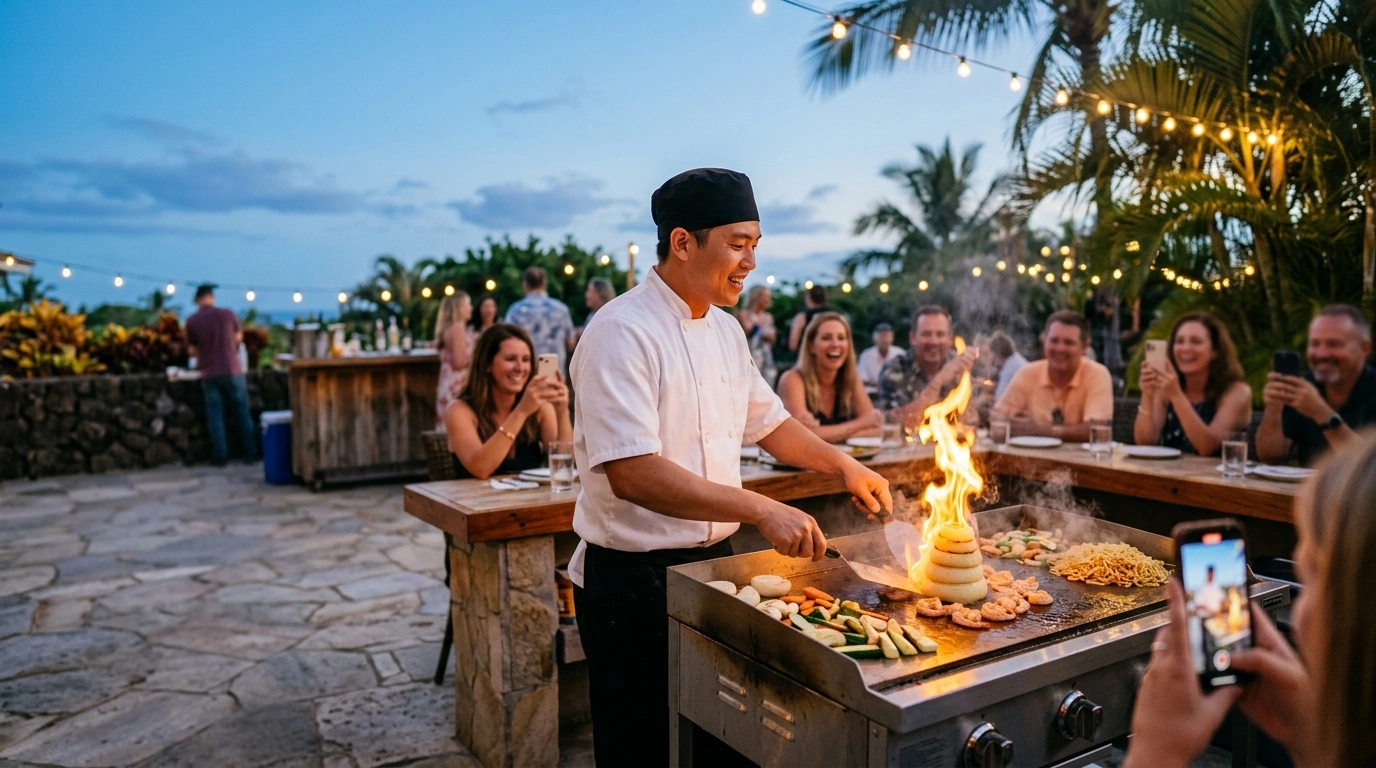
Hibachi parties seem built for TikTok. The grill heats up, the chef snaps the spatulas, and every phone appears before the first controlled flame. Soon, an onion volcano erupts, shrimp fly through the air, and fried rice takes shape on the steel. Dinner becomes the event.
That combination helps at-home hibachi clips travel across social feeds. One party can produce a dozen recognizable moments without elaborate decorations or a choreographed dance. The action looks colorful, fast, funny, and clear, even with the sound off.
TikTok did not invent hibachi dining. Likewise, “taking over” describes momentum rather than a measurable share of party content. The platform makes a familiar experience feel accessible by showing restaurant-style cooking on an ordinary patio. Viewers can picture the same setup at a birthday, bachelorette weekend, graduation, or family dinner.
Why Hibachi Parties Fit TikTok So Well
TikTok’s food-trend guidance highlights visually stimulating dishes, global flavors, authentic conversation, and shareable moments. Hibachi brings those elements into one frame. Viewers see bright food, rising steam, moving utensils, chef commentary, and close-up reactions.
The format also gives short videos a clear beginning, middle, and payoff. A clip can open on an onion stack, jump to the flame, and finish with guests cheering. Other videos can show raw ingredients becoming a finished plate or someone trying to catch a tossed bite.
Just as important, the footage often feels candid rather than polished. Guests laugh because the chef surprises them, not because someone asks them to pose. On TikTok, an imperfect reaction can connect better than a carefully produced party montage.
Broader dining research points in the same direction. OpenTable’s 2026 research reported a 46% year-over-year increase in experiential-dining activity. Nearly half of surveyed Americans also said they were more likely to book a restaurant offering something unique. The findings cover restaurants, not private events, but they support growing interest in experience-driven dining.
The Grill Creates More Than One Video Moment
Some party concepts look good in one wide shot and then run out of material. Hibachi keeps changing. The chef shifts between spatula work, the onion volcano, searing steak, and tossing shrimp. Guest reactions fill the gaps.
Each guest has a different reason to film. Food-focused guests record the sizzle and finished plates. Others capture the chef’s jokes and audience participation. Meanwhile, the host can film the full table without asking the guest of honor to perform all evening.
The sounds help, too. Spatulas strike the flat-top, food hits hot steel, and the table erupts in a sudden cheer. Music can wait. The original audio often carries enough energy on its own.
The best clips also matter to guests who never post them. Someone may save the flame video, share a shrimp-catching attempt in a group chat, or keep a grill-side photo private. The social value remains even when the footage never becomes public.
At-Home Hibachi Turns Dinner Into Entertainment
A typical at-home event begins when the chef arrives at an approved outdoor setup area. The chef brings a portable flat-top grill and cooking equipment. The grill needs an open, level surface with safe clearance from the home, landscaping, decorations, and guests.
Before the event, hosts should confirm access, equipment needs, setup dimensions, and cleanup duties. Service details vary by provider. Clear expectations prevent problems once the chef arrives.
Guests usually sit around or face the cooking area while the chef prepares the meal. Common proteins include chicken, steak, shrimp, and similar choices. Familiar hibachi-style vegetables and sides often accompany them. Because menus and portions vary, hosts should follow the provider’s package details instead of generic online estimates.
The performance then moves through the meal. Flames rise from the grill, and the onion volcano releases heat and steam. Spatulas flash against the steel as the chef draws guests into playful moments. Since everyone watches the same action, even unfamiliar guests have an easy conversation starter.
After service, the chef generally handles the agreed cooking-equipment and grill-area breakdown. Hosts should still confirm responsibility for tables, dishes, trash, leftover storage, and rented furniture. Most importantly, the host can join the party instead of standing over a stove.
Why At-Home Hibachi Feels Different From a Restaurant
A restaurant visit requires the group to travel, park, wait for a table, and follow the venue’s schedule. Large groups may sit at separate tables or struggle to hear over other diners. At home, the guest list controls the room or patio.
The setting can also match the occasion more closely. A birthday group can add a toast and cake without competing with nearby tables. A bachelorette group can choose its music and decorations. Families can arrange comfortable seating for older relatives or provide a quiet space for anyone who needs a break.
At home, guests feel that the performance has arrived specifically for their group. The chef can interact directly with the table. Meanwhile, the guest of honor stays at the center of the evening.
However, this format does not suit every property. A condo balcony is not an appropriate location. Many buildings, HOAs, and rental homes restrict open flames, outside vendors, events, or extra guests. Hosts should obtain written approval for the exact activity and space before booking.
Plan the Party Around the Meal, Not the Video
For a smooth schedule, work backward from the planned cooking time. Give guests enough time to arrive and get a drink without leaving them hungry. A 30- to 45-minute arrival window usually provides enough time for mingling before everyone sits down.
| When | What to handle |
|---|---|
| Several weeks out | Set the guest list, confirm the outdoor cooking area, check property rules, request a quote, and discuss access and weather policies. |
| With the invitation | Share the start time, address, RSVP deadline, outdoor attire guidance, parking details, children and plus-one policy, and rain plan. |
| One to two weeks out | Finalize responses, collect allergy and dietary information, and confirm seating, lighting, water, trash, and restroom access. |
| Several days out | Review the forecast, confirm the equipment-access route, organize drinks and appetizers, and communicate any schedule updates. |
| 24 hours before | Check the weather again, prepare the outdoor area, chill beverages, and choose someone to monitor radar and lightning. |
| Party day | Clear the grill zone, set out water, arrange seating, mark the access path, and complete a final weather check before setup. |
A firm head count affects food, seating, equipment access, and staffing. Invitations should clearly state whether the host has included children and plus-ones. This prevents confusion and surprise additions at the grill. Hosts should also collect dietary restrictions and allergies with the RSVP.
Before a full dinner, approximately three to four appetizer bites per guest offers a useful general guideline. Keep appetizers light so guests still want the meal. In Florida heat, avoid leaving large platters of perishable food outside. Dessert or cake can follow dinner and create a second celebration point.
Seating Matters More Than TikTok Decor
Guests need a clear view of the chef and enough room to avoid hot equipment. Before renting tables, ask the provider about the required cooking footprint and recommended seating arrangement. A photogenic layout will not work if the chef and guests cannot move through it safely.
Following federal fire-safety guidance, maintain at least a three-foot child-and-pet exclusion zone around hot cooking equipment. Keep the grill at least three feet from siding, railings, eaves, branches, and combustible decorations. The equipment or property may require more space, so confirm the chef’s actual setup requirements.
Keep balloon arches, dried foliage, hanging fabric, paper decorations, and favor bags away from the cooking area. Place the grill in an open outdoor space. Never use it indoors, in a garage, on a condo balcony, or beneath a covered patio. Flames must remain controlled on the grill surface and away from people and structures.
For evening events, light walkways and the dining area without shining harsh lights at guests. Soft string lights can warm the space when placed outside the flame zone. Practical lighting near steps, gates, and restrooms helps prevent falls. Test every light before sunset.
Food Allergies Require a Direct Conversation
Hibachi cooking commonly uses shared grill surfaces, utensils, sauces, and squeeze bottles. Ingredients may include soy, wheat, sesame, milk products such as butter, egg, fish, and shellfish. Therefore, a request for “no shrimp” does not prevent shellfish cross-contact.
Ask guests about allergies when they RSVP, then speak with the chef well before the event. Describe each allergy’s severity and ask what separation the chef can realistically maintain during preparation, cooking, and service. Never describe a catered meal as allergen-free unless the provider confirms a process that supports that claim.
Food safety remains important after the party moves outdoors. Do not leave perishable food at room temperature for more than two hours. Above 90°F, that limit drops to one hour. Keep cold dishes at 40°F or below over ice and hot food at 140°F or above.
Serve food in small trays instead of placing every appetizer or dessert outside at once. Replace trays as needed. Discard anything that exceeds the applicable time limit rather than returning it to the refrigerator. Promptly refrigerate safely handled leftovers in shallow containers and use them within three to four days.
Florida Weather Can Change the Entire Plan
In South Florida, the wet season generally runs from mid-May through mid-October. It brings high humidity and frequent opportunities for afternoon thunderstorms. Orlando’s wet season usually starts in late May and continues into October.
Summer events often feel more comfortable later in the day. Provide shade, fans, plenty of cold water, and an air-conditioned place where guests can cool down. Heat planning matters as much as rain planning.
A pop-up tent does not provide a lightning plan. Covered patios, open pavilions, carports, and small rain shelters also lack adequate lightning protection. Safe shelter requires a substantial enclosed building or a hard-topped metal vehicle.
Review the forecast several days before the event, again 24 hours ahead, and once more before setup. Assign someone other than the chef to monitor radar and lightning. If anyone hears thunder or sees lightning, move everyone inside, including the cook. Wait at least 30 minutes after the last thunder before resuming outdoor activity.
Hurricane season runs from June through November. During those months, contracts and invitations should account for postponements, evacuation orders, and cancellations. Ask about weather terms before paying a deposit because policies vary. A workable backup plan may require a new date rather than moving an open-flame grill under a roof.
Let Guests Film Without Turning the Party Into a Set
Repeated reactions quickly flatten the mood. Instead, choose one or two moments when filming makes sense, such as the chef’s introduction or onion volcano. A group cheer can also work. Afterward, encourage guests to put down their phones for part of the meal.
This approach gives guests useful clips without placing a wall of screens between the table and chef. It also helps the guest of honor feel celebrated rather than constantly recorded. For a toast, tribute, or personal announcement, decide beforehand whether guests may film.
Do not assume that every guest wants to appear online. Ask permission before posting or tagging an identifiable person. Take extra care with children and anyone caught in an embarrassing moment. If someone requests removal or untagging, honor the request without debate.
Hosts can add a short social note to the invitation: “Feel free to film the cooking show, but please check before posting other guests.” That sentence works better than a long list of rules. Strong TikTok clips usually come from genuine reactions, not staged performances.
How Hibachi Compares With Other Party Food Formats
A buffet works well when guests need to eat at different times or move around a larger event. It can serve a broad crowd efficiently. However, it requires temperature control, replenishment, and a plan for managing the line. The food itself rarely provides the entertainment.
A food truck adds novelty and can suit casual events with enough parking and service space. Still, separate ordering lines may pull guests away from the main gathering. Hosts must also check property access, neighborhood rules, power needs, permits, and vehicle clearance.
A restaurant often provides the simplest option for hosts without a suitable outdoor space. The venue manages the dining environment, restrooms, and much of the cleanup. In exchange, the group has less control over timing, noise, and privacy. A restaurant makes sense when home access or open-flame restrictions rule out grill service.
A traditional private chef dinner suits guests who prefer a quiet, coursed meal with more time for conversation. At-home hibachi combines dinner and entertainment around a shared cooking performance. The right format depends on how the group wants to spend the evening, not what currently trends online.
The Best Hibachi Parties Work Without Social Media
TikTok makes this dining format visible because it delivers action quickly. Viewers see flame, steam, spatula work, tossed shrimp, changing ingredients, and honest reactions. Yet the clips reflect the experience rather than define it. Guests gain a shared focal point while the host sits down and joins them.
Start with a suitable open outdoor area, a confirmed head count, comfortable seating, clear allergy information, and a practical weather plan. Add cold water and a thoughtful nonalcoholic drink. If alcohol is available, arrange safe rides home. Then let the chef and grill provide the visual effects.
Hibachi OMG offers at-home service in Miami, Fort Lauderdale, Boca Raton, West Palm Beach, and the Orlando area. Setup requirements, menus, availability, and pricing vary. Request a quote and confirm the property details before inviting guests. Phones may appear when the onion volcano starts, but a good party eventually draws attention back to the food and table.


