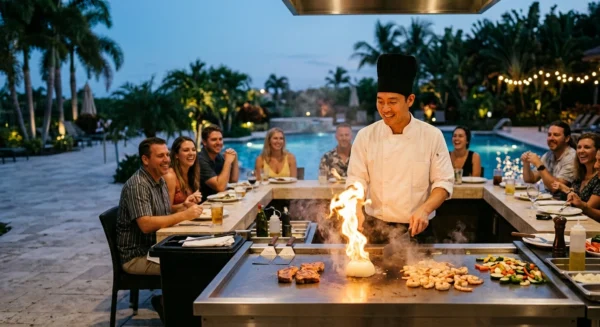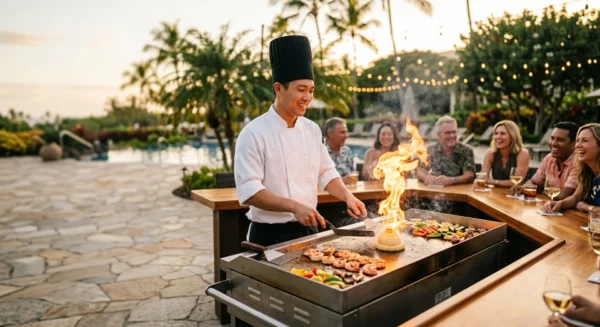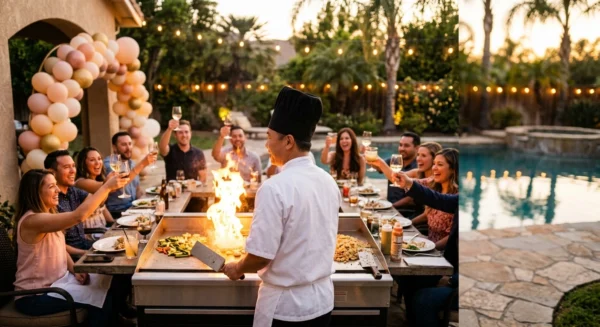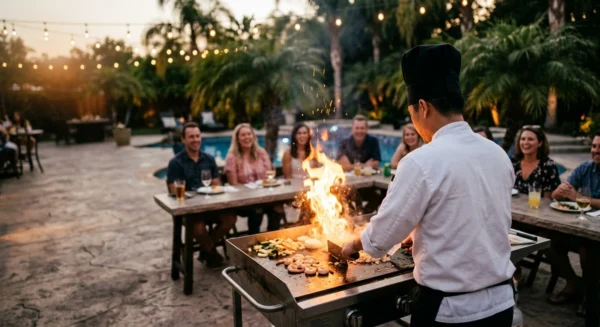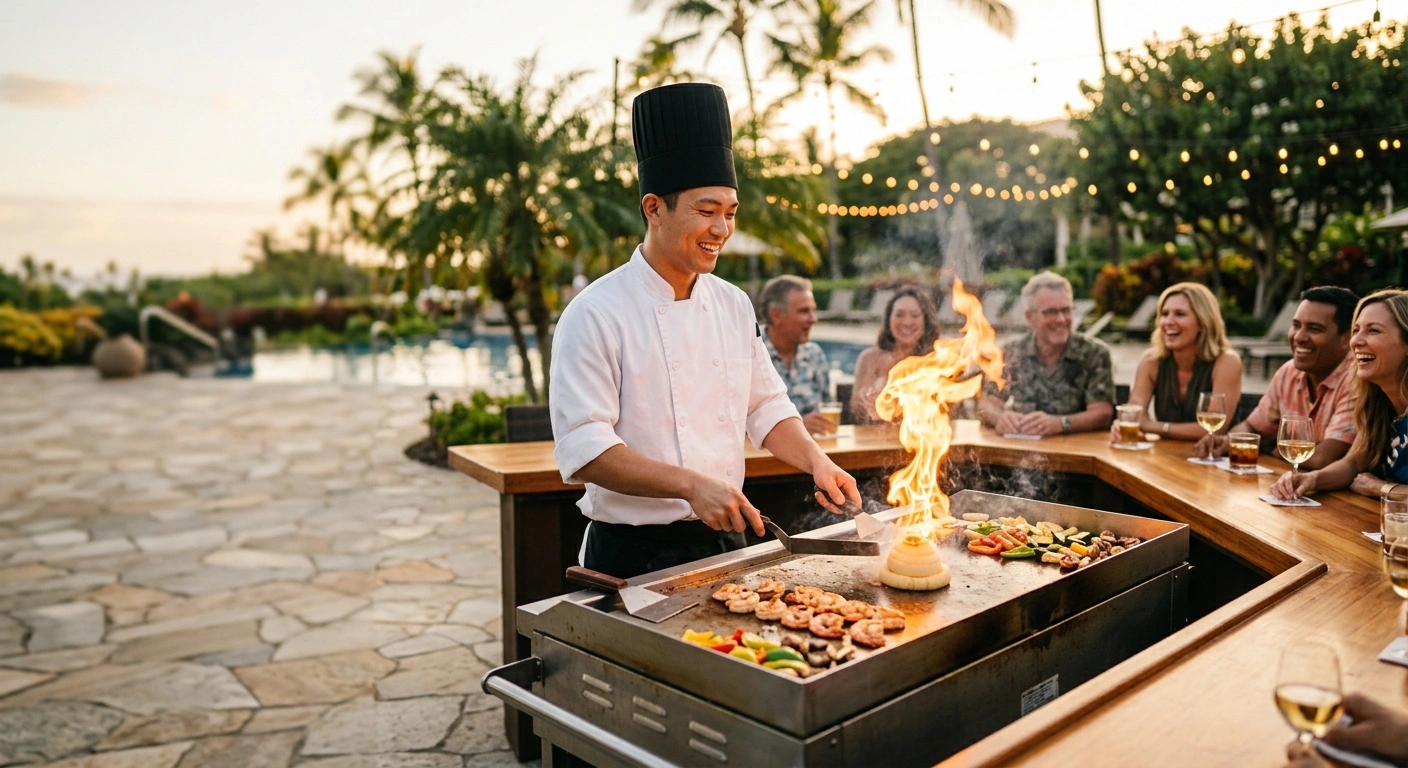
Mobile hibachi catering starts with spatulas striking hot steel, a burst of flame, and guests watching the chef’s next move. Instead of dropping off food, the caterer cooks at your home or private event space. The chef uses a portable flat-top grill and may build an onion volcano, toss shrimp, or invite guests to participate.
However, the term “mobile hibachi catering” does not describe one standard package. The service usually combines live cooking, ingredients, equipment, and entertainment. Your signed proposal determines exactly what you receive.
Tables, chairs, drinks, tableware, servers, desserts, permits, gratuity, and full-event cleanup may cost extra. Before paying a deposit, compare the proposal with everything your party needs. Look beyond the food.
What Mobile Hibachi Catering Usually Includes
The core service generally includes a chef, portable cooking surface, cooking tools, and ingredients for the agreed menu. The chef transports the equipment, sets up in an approved outdoor location, cooks, and breaks down the station. The package may also cover fuel, seasonings, sauces, oils, and grill supplies.
Ask whether the booking includes assistants or servers in addition to the chef. A chef can cook and perform without refilling water, clearing plates, managing appetizers, or packaging leftovers. Confirm who handles each task.
Also ask whether the caterer brings thermometers, sanitation supplies, handwashing equipment, and suitable fire-safety equipment. These details lack the excitement of the flame show. Still, they reveal whether the service plan covers the practical work.
The Food Included in a Hibachi Catering Package
Most hibachi-style menus include grilled proteins, rice or noodles, vegetables, and sauces. Some caterers also offer starters or salads. Common protein choices include chicken, steak, shrimp, fish, and similar options.
Do not assume every guest receives every available protein. Some packages provide one selection per person. Others include combinations or offer additional portions.
Use the caterer’s documented portions and your final guaranteed guest count to plan the order. Generic pound-per-person formulas offer little value for menus that combine proteins, rice, vegetables, sauces, and appetizers. Ask how the caterer handles children, non-eating attendees, vendor meals, and last-minute guests.
List appetizers, desserts, and late-night food as separate items in the proposal. Do not assume that a quoted dinner package includes them.
The Cooking Show and Guest Experience
The performance separates at-home hibachi from standard drop-off catering. Guests gather near the grill while the chef works the spatulas and creates controlled flames. The chef may also build an onion volcano or turn food preparation into a group activity.
Tossed bites and guest participation often appear in the show. However, each chef offers different tricks and levels of interaction. Ask whether the quote covers a complete interactive performance or mainly live cooking.
Confirm the expected timing for setup, cooking, dining, and breakdown. You can then give guests a meaningful arrival time. Late arrivals may miss part of the performance and their planned meal service.
Tell parents that the chef will work around high heat. Keep children, pets, loose clothing, and crowded photo-taking away from the cooking area.
Tables, Chairs, Plates, and Linens May Cost Extra
Hosts often assume the cooking package includes the guest setup. Yet a hibachi company may bring the grill and chef tools without providing tables, chairs, linens, or place settings. Ask who supplies every dining item.
Your checklist should cover plates, bowls, chopsticks, forks, napkins, cups, serving utensils, sauce dishes, and table coverings. Put each included or excluded item in writing.
Arrange the seating around the performance rather than simply fitting chairs into the yard. Guests need a clear view without entering the cooking, fuel-handling, or service path. Leave open routes for unloading, restrooms, and exits.
Plan accessibility before placing furniture. Provide clear routes, suitable seating, reachable dining surfaces, and an accessible restroom for guests with mobility needs.
Drinks and Bar Service Require Separate Planning
Never assume dinner includes water, ice, soda, mixers, coffee, alcohol, cups, or bartenders. Ask whether the caterer handles beverages. If so, confirm whether the service covers chilling, pouring, restocking, and cleanup.
If the host supplies drinks, start with roughly one drink every 45 minutes. That equals about three drinks per person over two hours. Treat this only as a planning benchmark because heat, event length, guest ages, and service style affect demand.
Provide plain cold water alongside flavored drinks, mocktails, and alcoholic options. A gallon of a bulk nonalcoholic drink generally provides 12 to 16 servings, depending on cup size and ice. Increase the water supply for outdoor events because guests often return for refills.
Keep beverage ice separate from ice that holds food cold. Separate coolers also prevent frequent drink service from warming perishable ingredients.
The Outdoor Setup the Host Must Provide
Hibachi chefs cook with an open flame on an outdoor grill. Plan for an open, flat area and confirm the caterer’s requirements before booking. Never assume the chef can move into a home, garage, condo balcony, or covered patio during rain.
Focus on the usable footprint rather than the yard’s total size. The layout must fit the grill, chef workspace, seating, and safe circulation. It must also account for heat, smoke, landscaping, pools, pets, and emergency access.
Ask whether the team needs potable water, electricity, a sink, refrigeration, indoor prep access, parking, restrooms, or a loading area. Do not treat a portable hibachi setup like a self-contained food truck. A food truck may have built-in plumbing, refrigeration, power, handwashing, and dishwashing facilities.
Give the team gate codes, security procedures, parking instructions, and elevator reservations. Explain the distance between unloading and the cooking site. Protect any electrical cords that cross pedestrian or vehicle routes.
Rules for Condos, HOAs, Rentals, Parks, and Beaches
A private invitation does not override property rules. Condominiums and HOAs may regulate open flames, propane equipment, vendors, common areas, parking, noise, trash, and elevator access. They may also set guest limits or insurance requirements.
Get written approval before booking. This step matters especially for pool decks, common lawns, clubhouse patios, and other shared spaces.
For an Orlando-area vacation rental, request written permission from the owner or manager. The approval should address the caterer, visitor count, cooking equipment, fuel, parking, furniture movement, and quiet hours. A rental host’s permission does not override community or local rules.
Public parks and beaches may require permits for events, grills, vendors, alcohol, sound equipment, temporary structures, or food preparation. Check with the city or county before paying nonrefundable vendor charges. A picnic shelter reservation does not necessarily authorize live cooking.
Dietary Requests and Allergy Planning
Collect dietary restrictions and serious allergy information with each RSVP. Connect every request to a named guest. Hibachi cooking often involves shared grills and ingredients such as soy sauce, wheat, sesame, butter, egg, and shellfish.
Removing one ingredient does not prevent cross-contact on a shared cooking surface. Discuss allergies with the chef before signing the contract. Ask about separate utensils, sauces, preparation surfaces, cooking areas, and timing.
Do not promise an allergen-free meal unless the food-service operator directly confirms its procedures. Even then, explain the exact process instead of making a broad guarantee.
Get written confirmation for vegetarian, vegan, allergy-aware, halal, kosher-style, and other requested meals. A note that says “dietary needs accommodated” does not explain ingredients, cooking methods, or cross-contact limits.
Food Safety During an Outdoor Hibachi Party
Live cooking allows much of the meal to move directly from the hot grill to the plate. The team must still handle food safely before, during, and after service. Keep cold perishable food at 40°F or below and held hot food at 140°F or above.
Do not leave perishable food in the temperature danger zone for more than two hours. Reduce that limit to one hour when the outdoor temperature exceeds 90°F. The shorter limit frequently affects events in South Florida and the Orlando area.
For a long event, serve appetizers and cooked foods in smaller batches. Avoid placing the entire buffet outside at once.
Keep raw proteins and their juices away from cooked food, vegetables, sauces, garnishes, and clean plates. Check doneness with a thermometer rather than relying on browning.
What Cleanup Actually Covers
Cleanup may cover the grill, cooking equipment, and waste from the chef’s station. It may exclude the host’s glassware, guest tables, decorations, furniture, and general party trash. Ask the caterer to define setup, breakdown, and cleanup in writing.
Discuss leftovers before the event. Confirm who keeps them, who supplies containers, and when the team will package the food.
Containers cannot make food safe after it has spent too long at an unsafe temperature. Clear enough refrigerator space before service. Discard perishable food that exceeds the applicable one-hour or two-hour limit.
Charges Outside the Menu Quote
The food-and-chef quote may not represent the final event total. Providers may charge separately for travel, parking, tolls, stairs, extended service, extra staff, rentals, or permits. Insurance documents, tax, service charges, and gratuity may also appear separately.
Request an itemized quote so you can compare providers on the same basis. Do not automatically treat a service charge as a staff tip. Ask whether the company distributes it to the event team and whether the quote already includes gratuity.
Review overtime terms, especially when late arrivals could delay cooking. Prices, deposits, payment schedules, cancellation rules, and rescheduling policies vary. Use the signed contract as your final reference.
Florida Weather Is Part of the Catering Plan
A tent alone does not create a complete rain plan in Florida. South Florida’s wetter months bring showers, high humidity, and thunderstorms. Orlando-area summer storms often develop during the afternoon and evening.
Hurricane season runs from June through November. Contracts for events during that period should explain postponements, cancellations, evacuations, credits, and refunds.
A tent, pavilion, carport, open garage, or covered patio does not provide safe lightning shelter. When lightning occurs, move everyone indoors, including the cook. Wait at least 30 minutes after the last thunder before resuming outdoor activity.
Identify a substantial enclosed building or hard-topped vehicle for guests and staff. Assign someone to monitor conditions and pause service. During hot weather, consider an evening schedule, shade, cold water, fans, and an air-conditioned recovery area.
How Hibachi Compares With Other Catering Formats
At-home hibachi suits events that combine dinner with entertainment. The grill creates a gathering point and gives guests a shared activity. It also allows the host to join the party instead of cooking in the kitchen.
The format can work for birthdays, family gatherings, wedding-weekend dinners, and company events. However, the site must support outdoor cooking and safe guest seating.
A restaurant may work better when the property cannot accommodate an outdoor flame. It can also reduce concerns about unpredictable weather. Buffet catering suits larger groups whose guests need to eat at different times.
Drop-off food provides a simpler option for casual events with limited service. A food truck can work when the site offers vehicle access and guests do not need simultaneous meal service. Base the choice on the site, schedule, group size, mobility needs, and weather plan.
Questions to Ask Before Booking
Send every caterer the same checklist so you can compare quotes fairly. Start with the number of adults, children, non-eating attendees, and event staff. Then ask when the caterer needs the final guaranteed count.
Provide the full address and describe the route from parking to the cooking area. Saying that you have a backyard does not give the team enough setup information.
Share allergies and dietary requests early, then attach each accommodation to a specific guest. Request written terms for weather, cancellations, setup, service charges, and cleanup. A precise proposal reduces party-day surprises.
- People: Does the quote include the chef, assistants, servers, bartenders, or only cooking labor?
- Equipment: Who provides the grill, fuel, cooking tools, thermometers, sanitation setup, and fire extinguisher?
- Food: Which courses, proteins, sides, sauces, garnishes, children’s meals, and dietary alternatives does the package include?
- Portions: Does each guest choose one protein, receive a combination, or get access to additional servings?
- Furniture: Who provides dining tables, chairs, serving tables, linens, and table coverings?
- Tableware: Who supplies plates, bowls, utensils, chopsticks, napkins, cups, and leftover containers?
- Beverages: Does the package cover water, ice, soft drinks, mixers, coffee, alcohol service, cups, or bar staff?
- Site needs: Does the team need water, electricity, a sink, refrigeration, prep access, restrooms, parking, or loading help?
- Timing: When will setup start, when should guests sit down, and when will breakdown end?
- Cleanup: Does the team clean only the grill area or also handle tables, dishes, leftovers, and party trash?
- Extra charges: Does the quote address tax, travel, parking, tolls, overtime, permits, insurance paperwork, service charges, and gratuity?
- Weather: What happens if rain, lightning, dangerous heat, or a tropical system prevents outdoor cooking?
Build the Catering Package Around Your Party
The best mobile hibachi catering proposal does more than list an extensive menu. It assigns every job, starting with grill delivery and ending with leftover storage. Clear terms help the host focus on the meal and performance.
Confirm the food, equipment, tableware, drinks, staffing, cleanup, property approval, and weather plan before the event. Put every inclusion and exclusion in writing.
Hibachi OMG serves private outdoor gatherings in Miami, Fort Lauderdale, Boca Raton, West Palm Beach, and the Orlando area. Menus, staffing, setup needs, availability, and other details vary. Request a quote, review the terms, arrange the seats, and let the chef handle the grill.