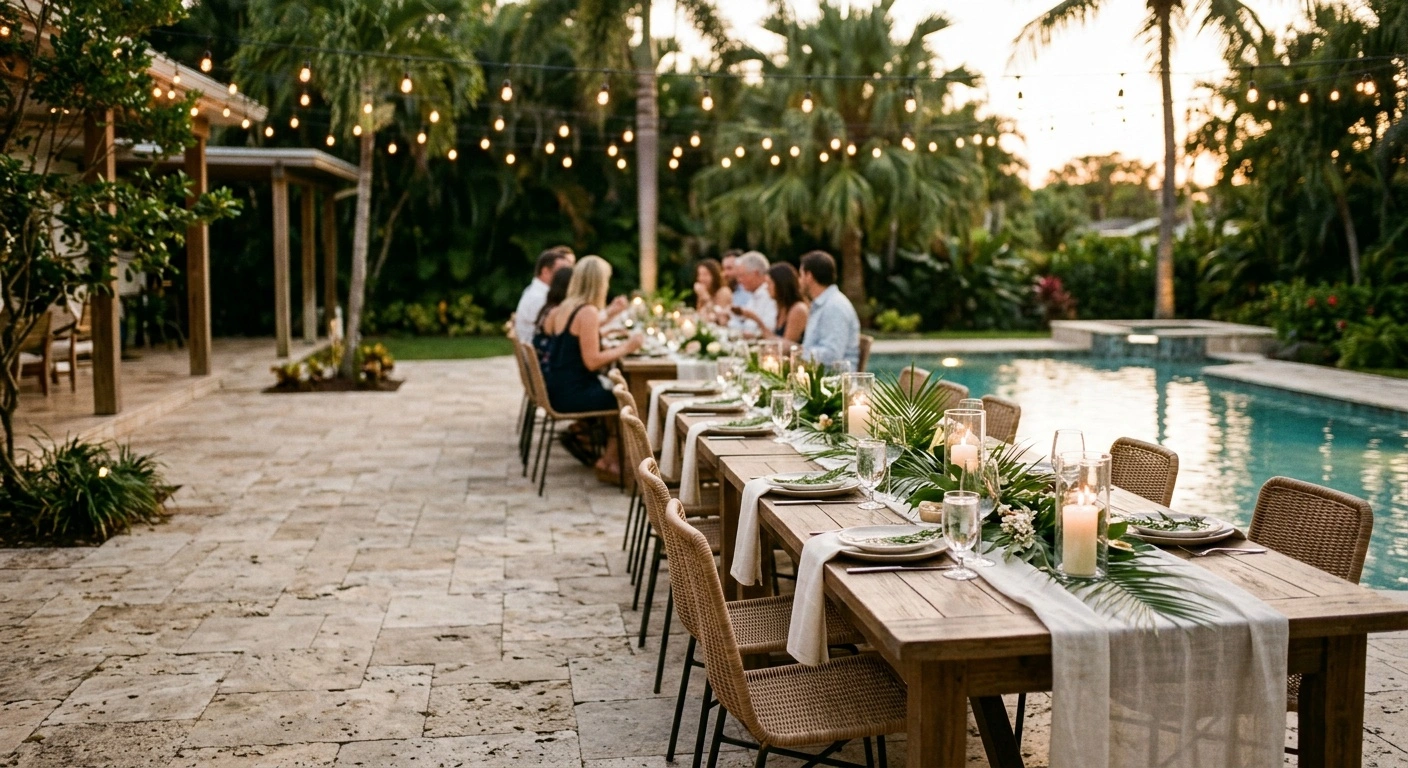
Luxury backyard dining starts with a simple goal: make guests feel cared for without making the evening stiff. Have cold drinks ready when they arrive. Provide comfortable chairs, warm lighting after sunset, and a meal the host can sit down to enjoy. Expensive décor cannot rescue an evening with no shade, crowded serving tables, or late food.
Plan the practical details first. Confirm the guest count, service style, weather backup, parking, restroom access, dietary needs, power, and neighborhood rules. Then direct your attention and budget toward the details guests will notice. The result should feel polished but relaxed, as if your backyard became the best table in town for one evening.
Build Your Luxury Backyard Dining Plan Around the Guest List
Set a firm guest-count target before renting tables or choosing a menu. A dinner for 10 can fit around one table and move naturally from drinks to dinner. A group of 20 usually needs more deliberate seating, service, and traffic flow.
At around 40 guests, you are planning a small event rather than a large dinner party. Parking, restrooms, food holding, staffing, cleanup, and neighbor impact all require more attention.
Next, choose a fully seated, partially seated, or reception-style format. A seated meal feels formal and gives everyone a clear place to land. However, it requires enough matching chairs and a practical way to serve every table. Family-style service encourages conversation, while a staffed buffet can handle larger groups efficiently.
Position the buffet away from the bar and kitchen. Otherwise, guests and servers may crowd the same area.
Ask about allergies, dietary restrictions, mobility needs, and children as part of the RSVP. Assigned seating helps you accommodate older guests, limited mobility, conversation groups, and a guest of honor. Place cards are not necessary for every dinner. Still, they prevent 20 people from circling the tables and asking where to sit.
Design the Backyard in Distinct Zones
A polished layout separates arrival, drinks, dining, cooking, and cleanup. This arrangement keeps guests from colliding in one busy corner. Place the welcome-drink station where guests can find it immediately. Keep it outside the main route between the house and tables.
Position appetizers away from the bar. Separating food and drinks prevents one large crowd from forming around both stations.
Set the dining area on flat, stable ground with clear routes to the house and restroom. Avoid locations where chairs back into a pool edge, garden bed, grill area, or uneven lawn. If a guest uses a cane, walker, or wheelchair, inspect the entire route from parking to the table.
Create a separate service area for glassware, water, napkins, serving pieces, and used dishes. Keep it discreet but close enough to limit trips through the house.
Place cooking equipment far from the home, deck railings, eaves, branches, decorations, children, and pets. Follow the equipment provider’s setup requirements. In a condo, HOA community, or vacation rental, confirm all relevant property rules before booking. These may cover guest limits, parking, noise, vendors, outdoor cooking, and open flames.
Make the Table Special Without Overdecorating It
Consistency usually defines a luxury table more than an oversized centerpiece. Use real dinnerware and glassware if the site and cleanup plan allow. Then repeat two or three materials across the setting. Options include linen napkins, clear glass, warm wood, polished metal, and simple ceramics.
A tablecloth can disguise folding tables. Uncovered wood tables with coordinated runners can look equally considered.
Keep centerpieces low enough for guests to see across the table. Small arrangements, bud vases, unscented candles, and greenery suit outdoor settings. Tall displays can block conversation or catch the wind. Avoid strongly scented flowers and candles near food, especially in heat or around insects.
Use place cards for formal milestone dinners, wedding-weekend meals, or events with a guest of honor. Printed menus remain optional. A small menu card can identify courses and dietary variations without crowding the table. Secure lightweight paper with clips, weighted bases, or another wind-resistant method.
Use Flattering and Functional Layered Lighting
Lighting should help guests see one another, read the menu, and walk safely after dark. Start with properly installed string lights or another source of overhead ambient light. Add enclosed candles or rechargeable lamps at table level.
Use separate pathway lighting near steps, pool edges, gates, elevation changes, and the restroom route. Do not rely on open candles as the only light source. Keep flames away from linens, foliage, serving areas, and places where guests could knock them over.
Bright security lights can flatten the mood. Test the yard after sunset to decide which fixtures should remain on. Cooking and service areas need brighter task lighting than the dining table. Staff need clear visibility while handling hot food and glassware.
Keep extension cords away from foot traffic and outdoor moisture. Use equipment designed for outdoor conditions. If you need more power, confirm electrical requirements with each provider in advance. This step helps prevent overloaded circuits during dinner.
If needed, operate a portable generator outdoors at least 20 feet from the house. Direct its exhaust away from the house and other buildings.
Choose a Menu That Can Handle the Setting
The best backyard menu does not need to be the most complicated. Choose food that holds the correct temperature and avoids plating delays. Guests should also be able to eat it comfortably at the tables you provide.
Confirm the caterer’s or chef’s needs before finalizing the menu. These requirements may include water, power, refrigeration, prep space, or access to a service entrance.
As a general guide, plan 3 to 4 appetizer bites per person when a full meal follows. Allow roughly 6 to 8 ounces of protein per person for the main meal. Side-dish estimates often range from 4 to 6 ounces per guest. A modest meal-count buffer makes more sense than dramatically overordering every item.
Adjust quantities upward when the party overlaps a normal mealtime or lasts several hours. Do the same if appetizers serve as the main food.
- Plated dinner: Choose this for a formal evening with a controlled guest count and enough service help for prompt courses.
- Family-style meal: This social format requires table space for serving dishes and a plan for dietary substitutions.
- Staffed buffet: This works well for larger groups when guests can reach the line easily. Staff must also hold hot and cold food safely.
- Live cooking: This format makes meal preparation part of the entertainment and creates a central activity.
Collect allergy information with the RSVP and share it directly with the caterer or chef. In the United States, the nine major allergens are milk, eggs, fish, Crustacean shellfish, tree nuts, peanuts, wheat, soybeans, and sesame. Guests may also have other medically significant allergies.
Shared grills, utensils, gloves, cutting boards, oil, and serving pieces can cause cross-contact. Disclose ingredients and preparation limits clearly. Do not describe food as allergen-free unless the provider can verify that claim.
Consider Live Hibachi for Dinner and Entertainment
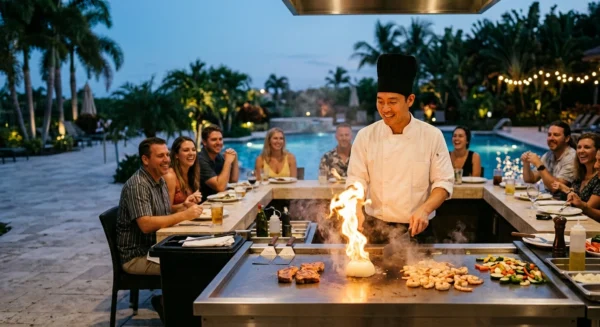
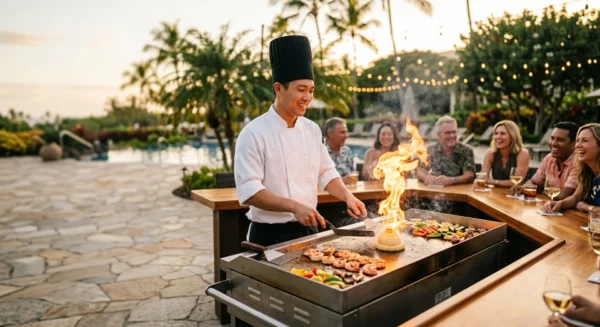
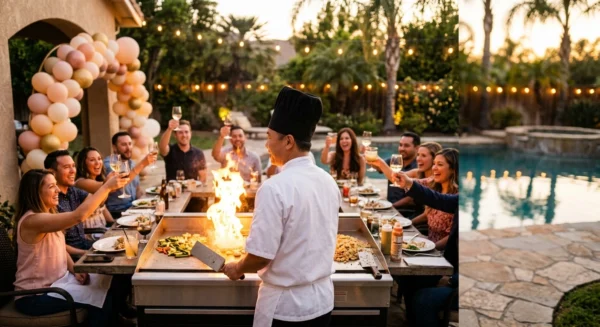
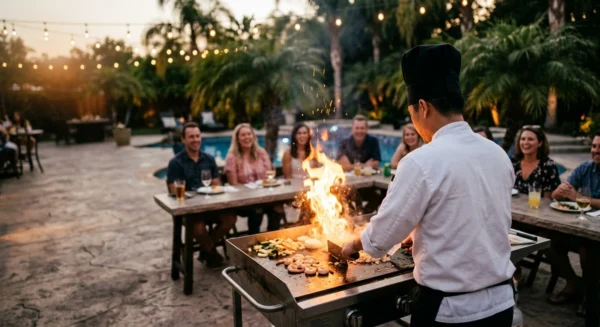
A private hibachi dinner creates a natural focal point as the grill heats and the spatulas start moving. Flames, an onion volcano, tossed shrimp, and quick grill work turn cooking into the evening’s entertainment. The format suits birthdays, engagement dinners, family celebrations, and corporate gatherings. It encourages interaction without forced games.
The chef generally brings a portable flat-top grill and sets up the cooking station. The chef then performs the show, serves the meal, and handles the cooking-area cleanup included in the service arrangement. Guests gather around the grill, which keeps dinner social and the host out of the kitchen.
Menus commonly feature chicken, steak, shrimp, and similar protein choices. Exact menus and service arrangements vary by provider.
Schedule hibachi cooking only in an open, flat outdoor area. Confirm the required setup dimensions and site conditions when booking. Do not assume a covered patio, garage, indoor room, or condo balcony can accommodate the service. Hibachi cooking uses an open flame outdoors.
Check HOA, condominium, community, and vacation-rental rules before committing to any grill-based service. Property rules may prohibit the setup even when the space appears large enough.
Discuss allergies early because the chef may use a shared grill. Common ingredients can include soy sauce, sesame, butter, egg, and shellfish. A restaurant may better suit hosts who do not want to prepare their property. Buffet catering works well when guests need to eat on different schedules.
Hibachi works best when everyone can gather for one shared dinner show. It also keeps the host from cooking or cleaning the kitchen.
Give Drinks the Same Attention as Dinner
A considered beverage station should give water, alcohol-free drinks, and alcoholic options equal attention. Serve chilled still and sparkling water where guests can see and reach it. Do not hide all the water in a cooler.
Add a signature mocktail, citrus spritz, iced tea, or herb-infused lemonade. Present it with the same care as the cocktails.
One beverage every 45 minutes provides a useful general planning estimate. Weather, event length, and the guest list will affect the total. A 750-milliliter wine bottle typically provides about five 5-ounce servings. Divide the beverage estimate according to what your guests drink rather than assuming everyone wants alcohol.
In Florida heat, stock extra water and other alcohol-free hydration. Alcohol and caffeine do not replace water.
Serve substantial food throughout alcohol service and use measured pours. Set a clear closing time for the bar. Plan safe rides home before guests prepare to leave. If children or teenagers attend, supervise alcohol carefully and never allow underage drinking.
Corporate hosts should also follow company alcohol policies.
Prepare Luxury Backyard Dining for Florida Weather
Florida weather belongs in the main event plan, not in a minor contingency note. The warmer, wetter season generally runs from May through October. Heat, humidity, afternoon thunderstorms, and lightning can disrupt an outdoor dinner.
Hurricane season runs from June through November. For late-summer and fall events, arrange written postponement and cancellation terms with outside providers.
During hot months, schedule dinner toward evening. Provide shade, cool water, fans, and access to an air-conditioned recovery area. Watch older adults, pregnant guests, children, and people with health conditions that reduce heat tolerance.
Remove standing water before the party. Place EPA-registered mosquito repellent where guests can use it without asking.
Assign one person to monitor the forecast, radar, and lightning. Do not give that responsibility to the host or cook. At the first thunder or visible lightning, stop the outdoor event. Move everyone, including the cook, into a substantial enclosed building or hard-topped enclosed vehicle.
Tents, open pavilions, covered patios, and similar open structures do not provide safe lightning shelter. Wait at least 30 minutes after the last thunder before resuming outdoor activity.
Decide in advance who will make the weather call and notify guests. Also determine whether you will delay, move, or cancel dinner. A practical backup plan needs adequate indoor capacity, seating, and a clear food-service arrangement. “We’ll go inside” does not provide enough detail.
Protect Food Quality and Safety Outdoors
Outdoor food requires active temperature control, especially in South and Central Florida. Do not leave perishable food out for more than two hours. Reduce that limit to one hour when the temperature rises above 90°F.
Keep cold food at 40°F or below and hot food at 140°F or above. Use ice, insulated equipment, or proper hot-holding equipment as appropriate.
When possible, use separate coolers for drinks and perishable food. Guests will open the drink cooler more often. Keep all coolers closed, shaded, and away from direct sunlight. Pack raw meat and seafood separately from ready-to-eat items.
If food must share one cooler, place raw products below prepared food. This arrangement keeps raw juices from dripping onto ready-to-eat items.
Use a food thermometer instead of judging doneness by color or grill marks. Never return cooked food to a platter that held raw meat, poultry, or seafood. First wash the platter with hot, soapy water.
Refrigerate leftovers promptly in shallow containers. Discard perishable food that exceeds safe time limits. Smell and appearance cannot confirm that food remains safe.
Work Backward From the Party Date
For a formal dinner or milestone, send invitations several weeks ahead. Allow more lead time for a large guest list or busy holiday period. Include the date, start time, address, occasion, hosts, RSVP instructions, deadline, and attire.
Also explain parking, footwear guidance, whether children may attend, and the weather plan. Ask about allergies and significant dietary needs in the same message.
| When | What to handle |
|---|---|
| Four to six weeks before | Set the guest count and budget, choose the service style, request quotes, review property rules, and confirm the weather backup. |
| Three to four weeks before | Send invitations, reserve furniture and service items, confirm parking, and discuss power, water, vendor access, and cooking requirements. |
| One to two weeks before | Finalize RSVPs, allergies, menu choices, seating, rentals, lighting, beverage quantities, and the event timeline. |
| Two to three days before | Check the forecast, remove standing water, prepare the yard, confirm arrival times, and report access changes to providers. |
| Day of | Set the tables early, chill drinks, establish food-holding areas, test lighting, clear walkways, and brief the weather monitor. |
Confirm gate access, delivery parking, quiet hours, and vendor instructions in writing when applicable. A large backyard, pool deck, or vacation-rental lawn does not guarantee permission for events or outdoor cooking.
Get written approval from the owner or manager when professionals, equipment, rentals, extra visitors, or amplified music are involved. This confirmation can prevent last-minute access or setup problems.
For gatherings at a public park or beach, contact the city or county that controls the location. Grills, alcohol, amplified sound, vendors, generators, tents, and larger gatherings may need separate permission. A basic pavilion reservation may not cover them.
Requirements vary by location. Do not assume that food approval also covers alcohol or temporary equipment.
Run the Evening With a Clear, Relaxed Timeline
Prepare the table, refreshments, music, lighting, and guest areas before the stated arrival time. Guests often arrive at that time or shortly afterward. The host should greet them instead of carrying chairs through the yard.
Offer a drink immediately and introduce guests who do not know each other. Point out the restroom before anyone needs to ask.
Allow about 30 to 45 minutes for arrivals and appetizers before dinner. Adjust the timing for the group’s size and the event’s formality. Announce the transition clearly rather than hoping everyone notices the food.
For assigned seating, direct guests to their place cards. Give the guest of honor a comfortable, prominent seat.
Plan one short toast after guests sit down or before dessert. The host traditionally opens the toasting, but the glass can contain any drink. Alcohol is never required. Keep speeches positive and brief so the meal continues and hot food stays warm.
Finish with a visible final course or coffee service instead of letting the party fade into cleanup. Move used plates discreetly to the service zone. Refresh the water and keep pathway lighting on until the last guest leaves.
A calm ending helps the entire evening feel professionally managed.
Spend on Comfort, Service, and a Present Host
The strongest luxury backyard dining experiences put comfort ahead of decoration. Guests remember a proper seat, hot food, clear conversation, and a relaxed host. Spend first on dependable food service, comfortable furniture, lighting, weather preparation, and cleanup help.
Then add the visual details. Use linen, flowers, candlelight, coordinated tableware, and one or two personal touches tied to the occasion. Skip decorations that complicate the yard without improving the guest experience.
An outdoor dinner from Hibachi OMG can suit properties in Miami, Fort Lauderdale, Boca Raton, West Palm Beach, or the Orlando area. The property must permit open-flame cooking and meet the outdoor setup requirements.
Whatever meal style you choose, do not spend dinner plating food, fixing lights, and answering the gate phone. Build a backyard that works smoothly. The real luxury is a host who gets to sit at the table.