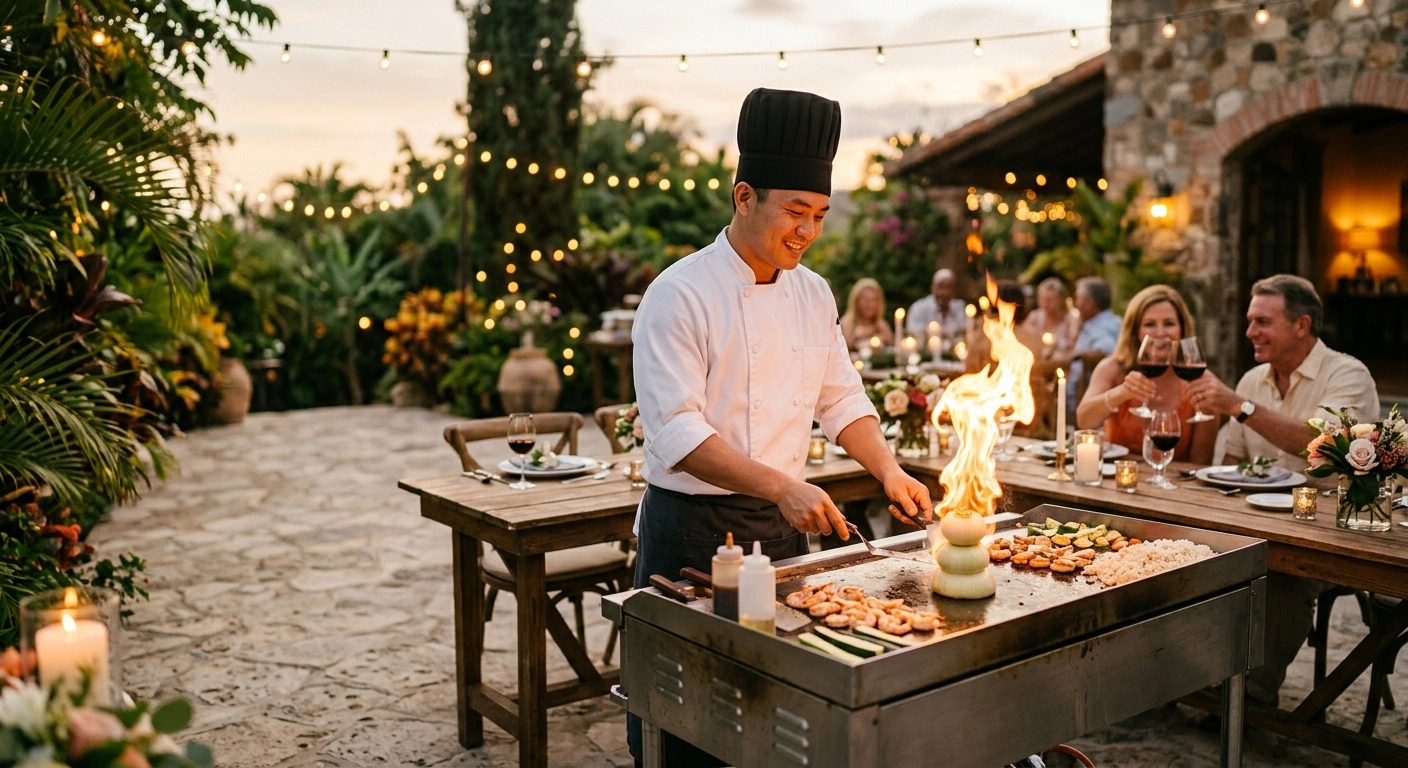
A hibachi anniversary dinner feels celebratory as soon as the grill heats and guests gather around the chef. Flames rise from the flat-top, an onion volcano smokes and shrimp may fly through the air. Meanwhile, the couple can enjoy the reactions instead of managing the stove.
This format keeps guests together rather than scattering conversations throughout the house. It can suit an intimate family dinner or a larger milestone party. However, the space, seating and menu must match the final head count.
You need a flat, open outdoor cooking area, comfortable seating and a practical weather backup. Schedule toasts, vow renewals and tributes while the grill is quiet. With those details covered, both spouses can enjoy the celebration without handling dinner and kitchen cleanup.
How a Hibachi Anniversary Dinner Works
For an at-home event, a private chef generally brings a portable flat-top grill and cooking equipment. The host supplies the approved outdoor space, seating, table settings, drinks and any extras outside the service agreement. Those extras may include decorations and dessert.
Before the event, confirm setup requirements, arrival time, menu responsibilities and cleanup terms. Providers handle these details differently. Hibachi uses an open flame, so place the grill in a flat, open outdoor area. Never plan to use it inside a home, garage, enclosed room or condo balcony.
Once guests sit down, the chef prepares the meal and presents a familiar steakhouse-style show. Guests may see rhythmic spatula work, controlled flames, an onion volcano and tossed bites of food. The chef serves each component hot while cooking the next one.
After dinner, the chef breaks down the grill according to the service agreement. The host still needs a plan for dishes, drinkware, dessert plates and general party trash.
Choose the Right Anniversary Size and Style
Start with the couple rather than copying the guest list from other family celebrations. Some couples prefer ten close relatives and a thoughtful toast. Others want forty friends, music and a full milestone party.
Decide whether the event will be a romantic dinner, family gathering or larger reception with hibachi at its center. That choice affects seating, arrival timing and the number of cooking sessions. Ask the chef how the head count will affect service before sending invitations.
If you host the event for the couple, respect their preferences. Do not turn a quiet couple into reluctant performers.
Build the Guest List Around the Space
A small group can sit close to the grill with a clear view of the chef. At around twenty guests, chair placement and serving flow require more attention. Restroom access also becomes more important.
Larger gatherings may need multiple tables, staggered service or another provider-approved arrangement. Never squeeze extra chairs into the chef’s work area because the patio technically holds them.
Count children in the final number and share their ages with the provider. A preschooler and a teenager have different seating and food needs. Place older adults and guests with limited mobility on stable ground near an easy restroom route.
In hot weather, reserve the coolest seats for people who face greater heat risks. This group includes older adults, pregnant guests, young children and people with certain medical conditions. Confirm attendance by the RSVP deadline instead of relying on “probably” responses.
Confirm That the Property Allows the Event
A private backyard or open pool deck often provides the simplest setting. Still, the cooking surface must remain level, stable and clear of low roofs, trees and combustible materials. Keep decorations away from the grill as well.
Maintain clear routes between the entrance, grill, tables and restrooms. Do not block driveways, exits or emergency access. Ask where the chef will unload and identify any gates, stairs, narrow paths or distant parking.
Keep decorations clear of fuel, cords, generators and walking routes. These areas need room throughout setup, service and breakdown.
For a condo, HOA community or shared recreation area, review the property rules before booking. Check guest limits, parking, vendor access, propane restrictions, quiet hours and common-area reservation requirements. Never assume that a condo balcony or shared pool deck permits a portable open-flame grill.
At an Orlando-area vacation rental, read the signed agreement and request written approval. The approval should cover outside guests, vendors and open-flame cooking. A large patio in listing photos does not grant permission to host an event.
Public parks and beaches may require reservations or permits. They may also regulate grills, food service, tents, sound and alcohol. Verify the exact city or county rules for the property.
Plan a Menu That Feels Celebratory
A useful hibachi menu provides choice without giving the chef an overly complicated order. Chicken, steak and shrimp are familiar proteins. Fried rice and grilled vegetables complete the expected meal.
If you offer several proteins, serve smaller portions of each. Do not plan a full entrée portion of every protein for every guest. Ask whether the couple has a favorite combination tied to a date, trip or family tradition.
Keep appetizers light because the main meal will be substantial. Guests should arrive at the grill ready to eat. Since menus and service details vary, confirm every choice with the provider and request a quote.
Use Quantity Guidelines as a Starting Point
When protein anchors the meal, allow roughly 6 to 8 ounces of cooked protein per adult. That amount covers all protein choices combined. It does not mean 6 to 8 ounces each of chicken, steak and shrimp.
About half a cup of cooked rice per person offers a useful starting point. Allow another half cup, or about 4 ounces, of cooked vegetables. Increase the vegetables and suitable protein options when several guests avoid meat or seafood.
Before a full dinner, allow about four to seven small appetizer bites per guest. The lower end usually covers a short cocktail period. For dessert, plan one normal portion per person or smaller tastes when serving several sweets.
Age, appetite, event length and menu variety all affect how much guests eat. Confirm final quantities with the food provider.
| Menu item | General planning guideline | When to adjust |
|---|---|---|
| Cooked protein | 6 to 8 ounces per adult in total | Adjust for children, multiple proteins and known appetites |
| Cooked rice | About 1/2 cup per person | Increase when fried rice serves as the main starch |
| Cooked vegetables | About 1/2 cup or 4 ounces per person | Increase for a vegetable-forward menu |
| Appetizers | About 4 to 7 bite-size pieces per person | Use fewer before a full meal with a short arrival period |
| Dessert | One normal portion per person | Serve smaller portions when offering several desserts |
Handle Allergies Before the Chef Arrives
Ask about allergies and dietary restrictions on the invitation or RSVP form. Do not wait until guests take their seats. Hibachi cooking often uses shared grill surfaces and common ingredients such as soy sauce, sesame, butter, egg, wheat and shellfish.
These ingredients overlap with several major food allergens. Shared surfaces can create cross-contact even when a guest does not order a specific allergen. Send complete dietary information to the chef and ask which accommodations the service can provide.
Never promise an allergen-free meal unless the provider confirms that its procedures prevent cross-contact. Guests with severe allergies may need separately prepared and handled meals. The provider’s procedures will determine the available options.
Discuss vegetarian, vegan, gluten-conscious and religious dietary requests early. Removing one protein may not make the rice, sauces or vegetables suitable. Label separate food clearly, and never make guests explain private medical information to the table.
Set the Invitation and Planning Timeline
Send anniversary party invitations about three to six weeks before the event. Early notice matters most for formal dinners, milestone anniversaries, holiday weekends and traveling guests. You can announce a small, informal gathering closer to the date.
Include the date, arrival time, location, occasion, hosts, RSVP method and response deadline. Add parking instructions, gate procedures and dress guidance. Also tell guests that the cooking will occur outdoors.
The chef works on a cooking schedule, so emphasize punctuality. Give guests a defined arrival window instead of an open-ended start time. Use the RSVP to collect attendance, children’s ages and all dietary restrictions.
If the couple does not want gifts, write “No gifts, please.” That simple note removes uncertainty.
| Timing | What to do |
|---|---|
| 4 to 6 weeks before | Set the guest list, confirm open-flame permission, request quotes and book the chef. |
| 3 to 6 weeks before | Send invitations with the deadline, arrival time, parking details, outdoor note and allergy request. |
| 2 weeks before | Contact nonresponders, finalize seating or rentals and choose the toast, music and decorations. |
| 1 week before | Send the final count and dietary notes, confirm access and review the weather backup. |
| 3 days before | Monitor the forecast closely, assign a weather watcher and confirm postponement or shelter thresholds. |
| Day before | Chill drinks, prepare decorations, clear access routes and stage tableware away from the cooking area. |
| Event day | Set up shade and water, check lighting, brief helpers and clear the grill area. |
Create a Schedule That Protects Meaningful Moments
Allow about 30 to 45 minutes for arrivals, greetings and drinks before dinner. The window gives the chef setup time and helps the host manage late arrivals. Offer a brief welcome before the show begins.
Save longer remarks for a quieter point. Plan an anniversary toast, video or vow renewal before active cooking or after the grill performance. Guests should not have to compete with spatulas and conversation.
Tell each speaker exactly when the toast will happen. Encourage a focused tribute instead of an unlimited open microphone. After dinner, serve cake and coffee and leave time for relaxed conversation.
If you want sunset photos, check the sunset time for the event’s date and address. Then build the schedule around it.
| Example time | Activity |
|---|---|
| 5:30 p.m. | Chef arrives and sets up while the host keeps guests clear of the work area. |
| 6:00 p.m. | Guests arrive for cold drinks and light appetizers. |
| 6:35 p.m. | The host gives a welcome and short anniversary toast. |
| 6:45 p.m. | Guests take their seats, and the hibachi show begins. |
| 8:00 p.m. | The host serves anniversary cake, coffee and alcohol-free after-dinner drinks. |
| 8:30 p.m. | Guests take photos and enjoy music and relaxed conversation. |
Make the Anniversary Details Personal
The grill already supplies movement, sound and spectacle, so keep the decorations restrained. Choose one visual idea, such as wedding colors, favorite flowers or a traditional anniversary material. Repeat it through napkins, candles or place cards.
Traditional themes can also guide small details. Paper marks the first anniversary, wood the fifth, silver the twenty-fifth and gold the fiftieth. These themes can inspire the setting without creating an expectation for themed gifts.
Keep paper goods, fabric, flowers and balloons far from the cooking equipment. Use low, weighted arrangements outdoors so wind cannot carry decorations toward the grill or pool.
A small display of wedding photos or images from different years gives guests a natural conversation starter. Create one photo area and one finished dining table rather than covering every surface. Keep all travel paths open.
Give the Couple One Meaningful Tribute
Strong anniversary tributes include details that clearly belong to the couple. Ask one or two people to share a short story. The couple can also say a few words or present a brief photo selection.
For a milestone anniversary, adult children or close friends can collect written memories for the couple. A vow renewal may also suit the occasion. However, it does not need to resemble a second wedding.
Separate the tribute from the loudest part of the hibachi show. Make sure older guests can hear the speaker. If someone will film, assign one person and choose a safe position away from the grill-side table.
Finish with a toast that includes a sparkling alcohol-free option. That allows every guest to participate comfortably.
Plan Drinks and Dessert Around Dinner
Set out chilled water before guests arrive, especially for an outdoor event in Florida. Offer a considered alcohol-free drink rather than relying only on soda. Options include citrus-mint sparkling water, iced green tea with lemon or a ginger-pineapple cooler.
If you serve alcohol, wine, beer and one batch cocktail require less management than a full self-service bar. A 750-milliliter wine bottle yields about five standard 5-ounce pours. Generous home pours can quickly reduce that number.
Some event planners use one alcoholic drink per legal-age guest per event hour as an inventory ceiling. That figure is not a consumption target, and many guests will drink less or abstain. Keep water available throughout the event.
Arrange designated drivers or hired transportation for anyone who drinks. A driver should not consume alcohol.
Anniversary cake provides a natural dessert centerpiece. Serve it after shutting down the grill so guests, candles and plates do not crowd the cooking area. Coffee, decaffeinated coffee and an alcohol-free nightcap can complete dessert.
Prepare for Florida Heat, Rain and Lightning
South Florida’s wetter season generally runs from mid-May into mid-October. In Orlando, frequent summer showers and lightning commonly occur from late spring into fall. A sunny morning does not guarantee a dry evening because afternoon sea-breeze storms can develop quickly.
Hurricane season runs from June through November. Therefore, warm-season events need flexible postponement terms and an established backup plan. Start monitoring the forecast closely at least three days before the event.
Assign one person to watch conditions continuously on event day. That person can track changing weather while the host handles guests.
For summer events, schedule dinner later in the day. Provide shade, safely positioned fans and plenty of chilled water. Watch for heavy sweating, weakness, nausea, dizziness, headache, cramps or fainting.
These symptoms can indicate heat exhaustion. Move the affected person to a cool place and apply cool, wet cloths. Offer water if the person remains conscious and can drink.
Seek immediate help if symptoms worsen or you suspect heat stroke. Give the coolest seats to older adults, young children, pregnant guests and people with chronic medical conditions.
Know What Qualifies as a Weather Backup
A tent may protect guests from light rain, but it does not provide safe lightning shelter. If you hear thunder, stop the event. Move everyone, including the cook, into a substantial enclosed building or hard-topped vehicle.
Open garages, carports, tents, small sheds and isolated trees do not provide safe lightning shelter. Wait at least 30 minutes after the last thunder or lightning before considering a return outdoors.
Do not move the grill under a canopy, covered patio or low roof when rain starts. Providers may prohibit open-flame cooking under tents or canopies. The setup must also follow applicable local rules.
Your backup may involve moving guests inside and pausing service. You might instead postpone the event or arrange a separate indoor meal without the grill. Set those decision rules before the party rather than improvising as lightning approaches.
Keep Outdoor Food Safe
Live cooking supplies freshly prepared food, but appetizers, desserts and leftovers still need temperature control. Do not leave perishable food unrefrigerated for more than two hours under normal conditions. Above 90°F, limit that time to one hour.
Keep cold food on ice and hot food hot. Replace small trays instead of leaving one large platter outside throughout the evening. Cold dishes should generally stay at 40°F or below, while hot dishes should remain at 140°F or above.
Use separate utensils and platters for raw and cooked food. Never return cooked meat to an unwashed platter that held raw food.
Cook poultry to a safe minimum internal temperature of 165°F and ground meats to 160°F. Whole cuts of beef or pork need 145°F followed by a three-minute rest. Fish and shellfish also require 145°F.
Use a food thermometer instead of judging doneness by color or surface browning. Refrigerate leftovers promptly in shallow containers. Use most cooked leftovers within three to four days.
Compare Hibachi With Other Anniversary Dinner Formats
A private hibachi chef suits couples who enjoy an interactive meal with everyone gathered together. The format combines dinner and entertainment while keeping the host away from the stove. It also gives the group a shared focal point.
However, hibachi requires an approved outdoor space, suitable weather and carefully arranged seating. A restaurant reduces home setup, but a long table may divide the group. Restaurant timing and noise can also affect the celebration.
Traditional buffet catering works for larger or free-flowing parties because guests can eat on their own schedules. However, it offers less built-in entertainment and requires careful hot and cold holding.
A plated private-chef dinner creates a quieter, more formal setting. It may suit a small anniversary where conversation matters more than a show. A food truck can serve a casual crowd with limited use of the indoor kitchen.
Food trucks may create lines, and local property rules still apply. Choose hibachi when you want the cooking performance to become part of the memory.
Bring the Celebration Together
Before guests arrive, walk the route from parking to the table. Remove anything that could trip someone carrying a plate or drink. Confirm the chef’s access, head count, dietary notes, cooking location and weather procedure.
Put out cold water early and keep every decoration away from the grill. Assign someone else to manage the door, photos or cake while you greet guests. Give the couple a clear tribute moment, then let the chef handle the entertainment.
Hibachi OMG serves approved outdoor properties in Miami, Fort Lauderdale, Boca Raton, West Palm Beach and the Orlando area. Setup, menu and booking details vary, so request a quote and confirm the requirements for the specific address. Check HOA, condo or rental rules before making a grill-based reservation.
A well-planned hibachi anniversary dinner should leave the couple feeling celebrated. It should also let the host sit down, raise a glass and enjoy the evening.


