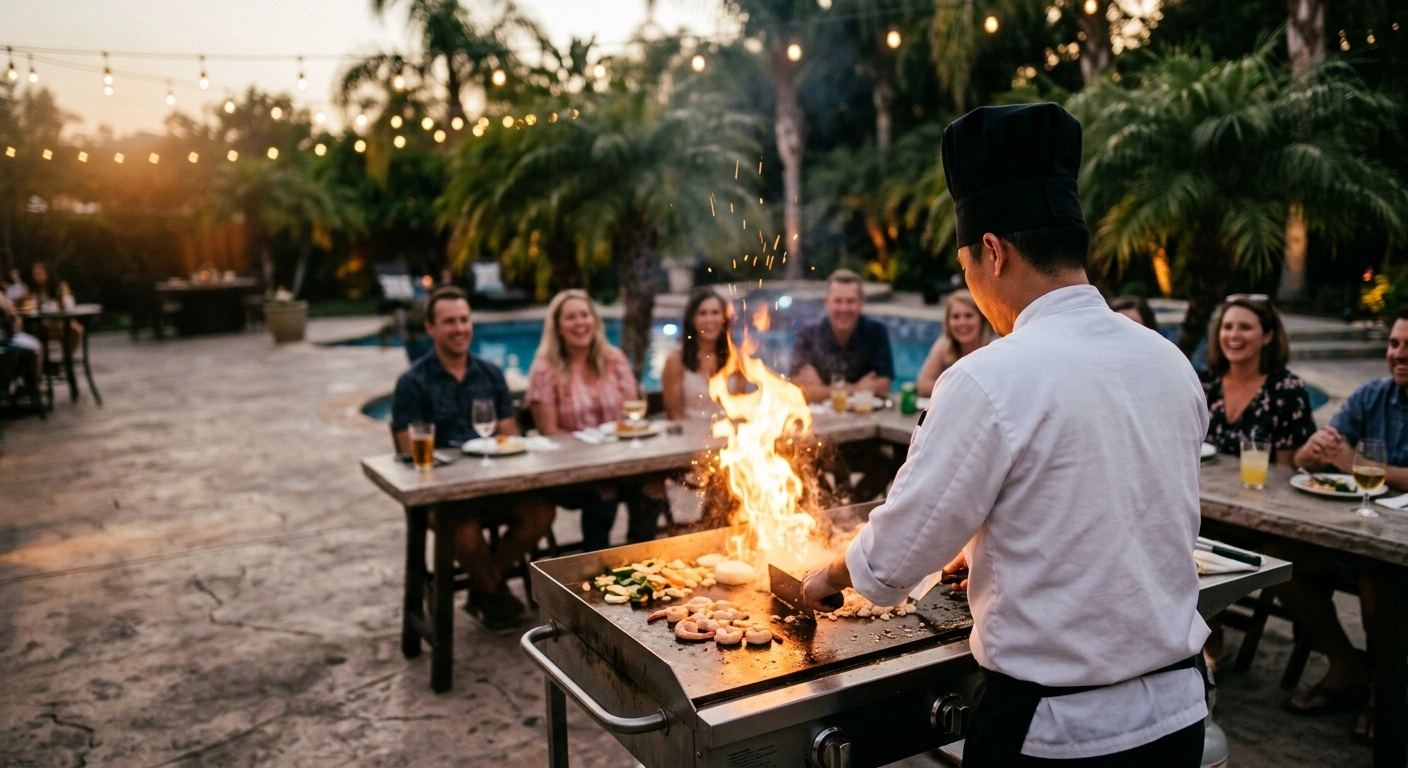
Hibachi catering makes hosting easier because cooking, meal service, and entertainment all happen in front of your guests. Once the flat-top grill heats up, people gather for the flames, spatula work, onion volcano, and occasional tossed shrimp. Meanwhile, the host can make introductions and sit down for dinner instead of checking the oven. The experience still requires planning, but it removes much of the last-minute cooking, portioning, and coordination.
Why Hibachi Catering Takes Pressure Off the Host
A traditional dinner can turn the host into the cook, server, dishwasher, and door attendant. Hibachi shifts the hardest work to a chef who brings a portable flat-top grill and prepares the meal outdoors. Since the chef cooks during the event, you do not need to keep several dishes hot for late arrivals.
The format also gives guests something to do between drinks and dinner. They watch the flames, react to tricks, talk across the grill, and sometimes join the fun. You do not need to arrange separate entertainment or push a mixed group into a complicated activity.
The host still handles the guest list, seating, property permission, drinks, parking, and weather backup. You must also communicate allergies and dietary restrictions. However, you can focus on people and logistics instead of cooking a full meal in party clothes.
How At-Home Hibachi Service Works
The chef generally arrives before mealtime to unload and set up the grill in an approved outdoor location. The setup requires a flat, stable surface with safe clearance from walls, rails, rooflines, branches, and decorations. Because the grill uses an open flame, do not assume a garage, balcony, screened enclosure, or covered patio will work.
After guests take their seats, the chef cooks proteins, rice, vegetables, and other selected items on the flat top. Common options include chicken, steak, and shrimp, but menus and available combinations vary by provider. During the meal, the chef adds familiar Japanese steakhouse elements such as flames, an onion volcano, and quick spatula work.
The chef serves each course as it comes off the grill, which keeps dinner active and informal. Afterward, the chef cleans the cooking station according to the agreed service scope. Grill cleanup may not include guest trash, drinkware, or patio furniture.
Before the event, confirm arrival time, service duration, setup needs, serviceware, fuel requirements, and utility needs. Also name an on-site contact. Put those details in writing so everyone knows what to expect.
What the Catering Team Handles
Divide responsibilities before booking to avoid confusion on event day. The catering team can estimate meal quantities, but it needs an accurate attendance count and complete dietary information. Include hosts and any professionals who will receive a meal, such as photographers, coordinators, or entertainers.
The host normally manages invitations, RSVPs, property access, parking, seating, drinks, restrooms, and decorations. Give the provider accurate details about gates, stairs, elevators, low branches, soft lawns, and irrigation heads. Also note the distance between the unloading area and the cooking site.
Measure gates and access routes before the chef arrives. Discovering that the grill cannot reach the yard an hour before dinner creates an avoidable problem.
Ask who supplies plates, utensils, napkins, sauces, serving pieces, trash bags, and equipment tables. Portable-chef services do not always include the same items. Hibachi catering removes a major block of work, but the remaining jobs still need clear owners.
Plan the Guest Count and Seating Around the Grill
An accurate headcount affects food, seating, cooking time, serviceware, and the setup footprint. Use one organized RSVP channel instead of tracking texts, group chats, and verbal replies. Include the date, start time, address, occasion, deadline, parking notes, and instructions for guests.
Arrange seating so everyone can see the grill without crowding the chef. Keep tables and chairs out of the access route. Guests should never need to squeeze behind a hot grill to reach a restroom or exit.
Keep children and pets at least three feet from outdoor cooking equipment. Mark that boundary clearly instead of relying on repeated reminders.
Provide a proper seat for anyone who cannot comfortably stand through the meal. Guests with mobility needs also need a stable route to their seats and the restroom. Before renting tables, ask the caterer about the required cooking footprint and preferred layout. No universal hibachi table size or setup exists.
Choose the Outdoor Location Before Booking
A pretty corner of the yard may not provide a safe cooking site. Place the grill on a stable, level outdoor surface away from siding, eaves, deck rails, greenery, balloons, and linens. Give guests a separate route around the cooking and fuel-handling area.
Condo balconies do not provide suitable hibachi locations. Many condominiums, HOAs, and vacation rentals also restrict open flames, outside vendors, or private events. A rental reservation does not automatically allow you to host visitors or hire a chef.
Get written approval for the guest count, vendor access, elevators, loading, parking, and quiet hours. The approval should also address propane rules, insurance, surface protection, and cleanup.
For parks, beaches, and other public properties, contact the city, county, or managing agency. Grills, propane, alcohol, amplified sound, tents, generators, vendors, and large gatherings may need separate permits or approval. Check the rules before paying nonrefundable costs or sending invitations.
Build Dietary Questions Into the RSVP
Ask guests about serious allergies, dietary restrictions, and religious food requirements during the RSVP process. A private field on an online form works better than requesting medical details at the table. Send the complete information to the chef before the final headcount deadline.
Identify which guest has each requirement so the chef can resolve questions in advance. Protect that information rather than displaying it publicly.
Hibachi cooking commonly involves shared grill surfaces and ingredients such as soy sauce, sesame, butter, egg, and shellfish. These ingredients overlap with several major allergens, while shared surfaces can cause cross-contact. Never promise an allergen-free meal unless the provider has assessed the setup and confirmed the available precautions.
Ask about substitutions and separate preparation methods, but do not assume one grill can accommodate every need. A guest with a serious allergy may need a separately sourced or individually packaged meal. That meal may look different, but it avoids improvisation after cooking begins.
Set an RSVP Deadline With Extra Time
Caterers generally require a guaranteed headcount, although each provider and contract sets its own deadline. Set your RSVP cutoff at least two business days before the caterer’s final guarantee date. That gap gives you time to contact missing guests and organize dietary notes.
For weekend parties, count business days instead of assuming you can make major last-minute changes. Ask the caterer how delays or headcount changes affect service.
Allow a short period for drinks and conversation before calling everyone to the grill. A long cocktail period can leave guests hungry and disrupt the cooking schedule. Tell the chef about any toast, cake presentation, surprise entrance, or group photo.
For a surprise party, assign one person to the guest of honor and another to the chef. Do not give both jobs to the same person. Build in a small timing cushion, but do not assume the grill can wait indefinitely.
Make Florida Weather Part of the Plan
Outdoor events in South Florida and the Orlando area need a real weather backup. Summer brings high humidity, intense heat, and frequent afternoon thunderstorms. Hurricane season runs from June through November.
When possible, schedule summer meals toward the evening. Provide shade, cold water, and fans, but keep fans safely away from cooking equipment.
A covered patio or pop-up tent may not provide a safe place for an open-flame grill. Confirm all weather and setup requirements with the caterer. Then decide whether bad weather will mean postponement, cancellation, or an indoor meal without the grill.
Put the backup plan in writing when several hosts or vendors share responsibility. Everyone should know who will make the decision and how the change will work.
At the first sound of thunder, everyone must go inside, including the cook. Tents, open pavilions, patios, and carports do not provide adequate lightning shelter. Stay in a substantial enclosed building or hard-topped vehicle until at least 30 minutes after the last thunder. The end of rainfall does not signal an all-clear.
Keep Drinks and Extra Food Simple
The main meal already provides the event’s focal point, so you do not need an elaborate appetizer buffet. For a pre-dinner snack, plan roughly two to four small pieces per person per hour. Treat that figure as a general rule of thumb.
Choose cold items that you can replenish in small batches. Vegetable cups, fruit skewers, and simple passed bites will not compete with dinner.
For beverages, estimate two to three drinks per guest during a two-hour gathering. This purchasing estimate does not suggest that every drink should contain alcohol. Warm outdoor events usually require more water, so chill still and sparkling water before guests arrive.
Offer at least two intentional alcohol-free choices. Options can include citrus iced tea, a ginger-lime spritz, or sparkling water with fruit and herbs.
If you serve alcohol, keep the focus on dinner and never serve anyone under 21. Arrange safe rides home when necessary. Private hosts should not assume they can sell drinks or charge admission without appropriate licensing.
For corporate gatherings, follow the company’s alcohol policy. Make nonalcoholic drinks easy to order without requiring an explanation.
Protect the Meal in Florida Heat
Cooking in front of guests reduces the time that the main meal waits on a buffet. However, appetizers, desserts, sauces, and leftovers still require temperature control. Perishable food should not sit unrefrigerated for more than two hours.
When the outdoor temperature exceeds 90°F, that limit drops to one hour. In a Florida backyard, the shorter limit often applies.
Keep cold food at 40°F or below with ice or coolers. Hold hot food at 140°F or above with suitable equipment. Replenish small platters from properly chilled or heated supplies instead of setting out everything at once.
Replace an old serving dish rather than adding fresh food on top. This approach keeps new food separate from items that have already spent time outdoors.
Promptly refrigerate safe leftovers in shallow containers and use most cooked leftovers within three to four days. Reheat leftovers to 165°F. Discard food that exceeds the outdoor time limit, even if it still looks good.
How Hibachi Catering Compares With Other Formats
A restaurant provides a separate venue, built-in shelter, and no home setup. However, guests need transportation, and the venue controls the seating arrangement. A long table or several smaller tables can split the group.
Buffet service works well for larger gatherings where guests need to eat at different times. It offers flexibility, but the host must plan food holding, placement, lines, replenishment, and seating. A buffet feeds guests efficiently, but it does not include built-in entertainment.
Food trucks suit casual events with enough parking and vehicle access. They can create lines, and property rules may restrict where they park or serve.
A portable hibachi service works best when guests want to share the dinner experience. The group gathers around one cooking area, watches the show, and eats within a coordinated period.
A Practical Day-of Hosting Checklist
Protect the cooking location before decorating the rest of the yard. Move fragile furniture, toys, hoses, pet bowls, and hanging decorations away from the setup. Check the access route, turn off scheduled sprinklers, and unlock gates before the chef arrives.
- Check the current forecast and review the lightning or postponement plan.
- Send gate codes, parking instructions, and arrival directions to the chef or event contact.
- Mark a clear cooking zone away from guest traffic, children, and pets.
- Set enough chairs and maintain accessible routes to restrooms and exits.
- Chill water and alcohol-free drinks before guests arrive.
- Keep dietary information available for the chef without displaying private details.
- Assign someone to greet the chef if the main host will be busy.
- Place trash and recycling bins outside the cooking zone.
- Keep appetizers refrigerated or on ice until serving time.
- Confirm responsibility for trash, rental items, and general patio cleanup.
Finish getting ready before the first guest arrives. Do not plan to dress while the chef sets up.
Greet guests, make introductions, and tell them when to take their seats. During service, designate one host to answer the chef’s questions. This prevents several relatives from giving conflicting instructions.
Take Your Seat at the Table
The main advantage of hibachi catering is the chance to handle key decisions before the party. You can settle the guest list, seating, weather plan, and dietary needs in advance. Once cooking begins, dinner and entertainment move forward together.
For events in Miami, Fort Lauderdale, Boca Raton, West Palm Beach, and the Orlando area, Hibachi OMG provides an outdoor grill and live cooking show. Menu choices, setup details, guest requirements, and booking terms vary. Request a quote and confirm the details in writing for your property.
Approve the outdoor space, discuss allergies, and settle the storm plan before event day. Then take the seat hosts often miss: the one at the table with everyone else.


